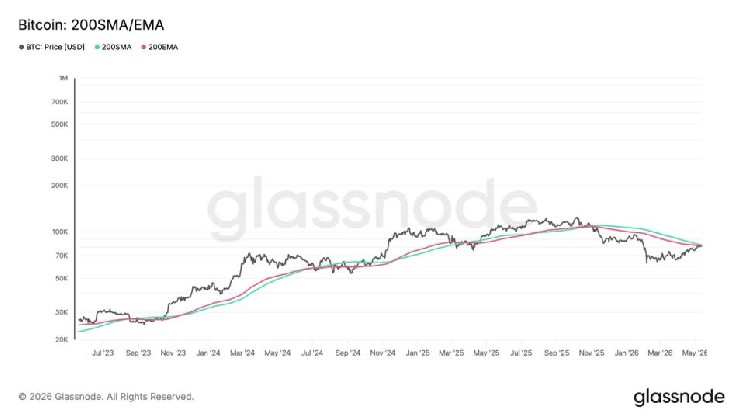
According to data from Glassnode, Bitcoin is in an important technical battle, trading just below two closely watched long-term trend indicators: the 200-day simple moving average (200SMA) at $82,455 and the 200-day exponential moving average (200EMA) at $82,027.
The 200SMA calculates the average closing price over the past 200 days, weighting each day equally. The 200EMA uses the same 200-day window but focuses on more recent prices and is slightly more responsive to current market conditions.
Together, these form a confluence resistance zone around $82,000 to $82,500 that Bitcoin needs to convincingly retake to signal a reversal of its long-term uptrend.
Bitcoin lost its 200 DMA for the first time in late November 2025, and the price rolled over from $108,000. A brief recovery attempt in January failed to regain levels near $97,000, and by early February 2026, Bitcoin had fallen to $60,000.
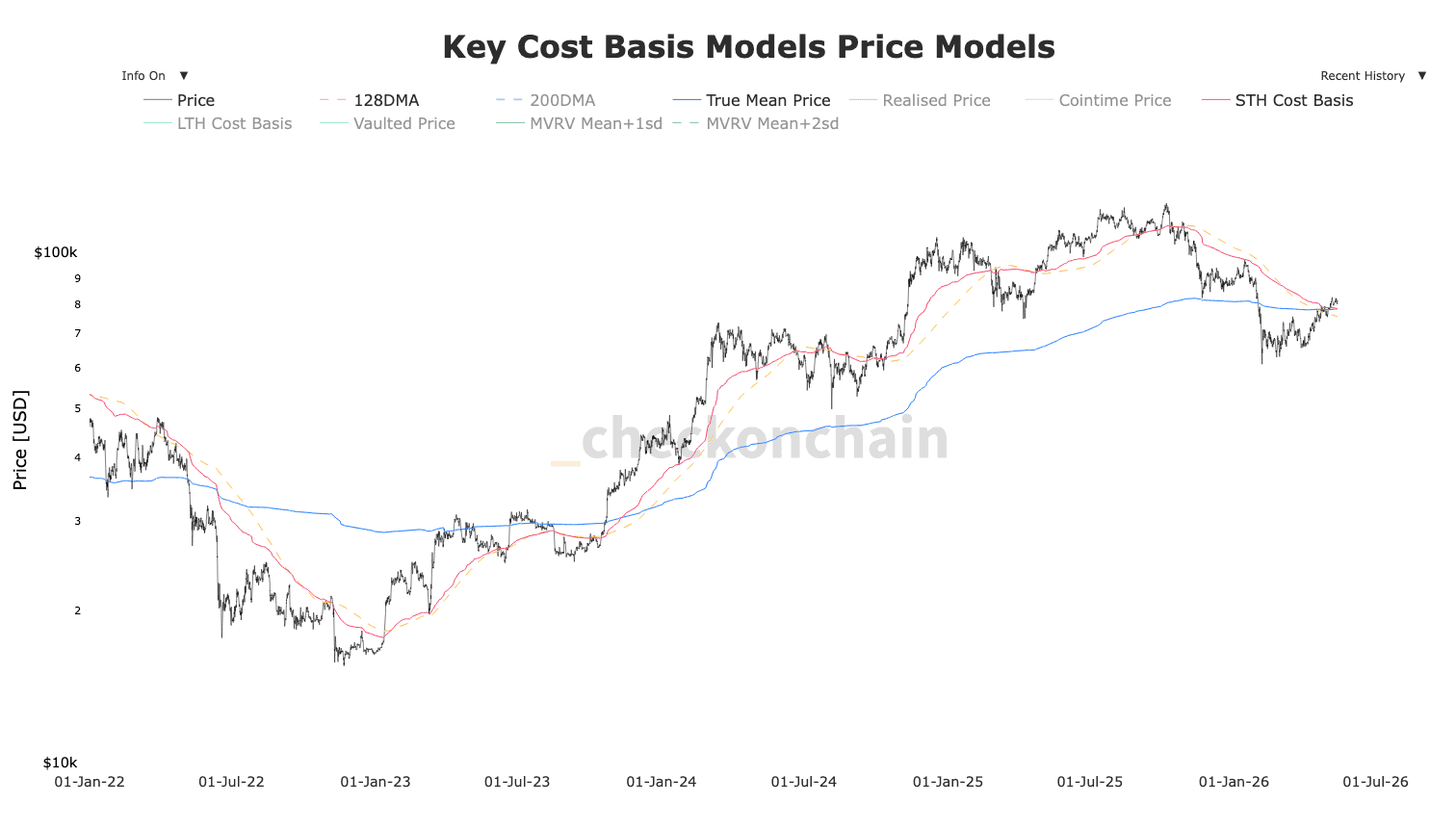
According to CheckonChain, the reason for cautious optimism among bulls is that Bitcoin is trading above several key levels on a cost basis. The 128-day moving average stands at $75,700, representing the average price paid by buyers in that short period of time, and is the level that BTCX successfully defended.
The current true market average of $78,200 reflects the average price at which all Bitcoins last moved on-chain, essentially representing the total cost basis of the entire active market.
The short-term holder cost basis of $78,400 tracks the average acquisition price of investors who bought within the past 155 days, a group historically prone to panic selling behind the scenes.
Bitcoin trading above all three suggests that the majority of recent buyers are still making profits, easing selling pressure from forced liquidations and panic selling. The key zone to watch is whether Bitcoin can flip to support at $82,000 to $82,500.