

If you had invested in 100 shares of Nvidia (NASDAQ: NVDA) in early 2025, you would have seen a modest capital gain by now, as the chipmaker continues to benefit from the surge in demand associated with the expansion of artificial intelligence.
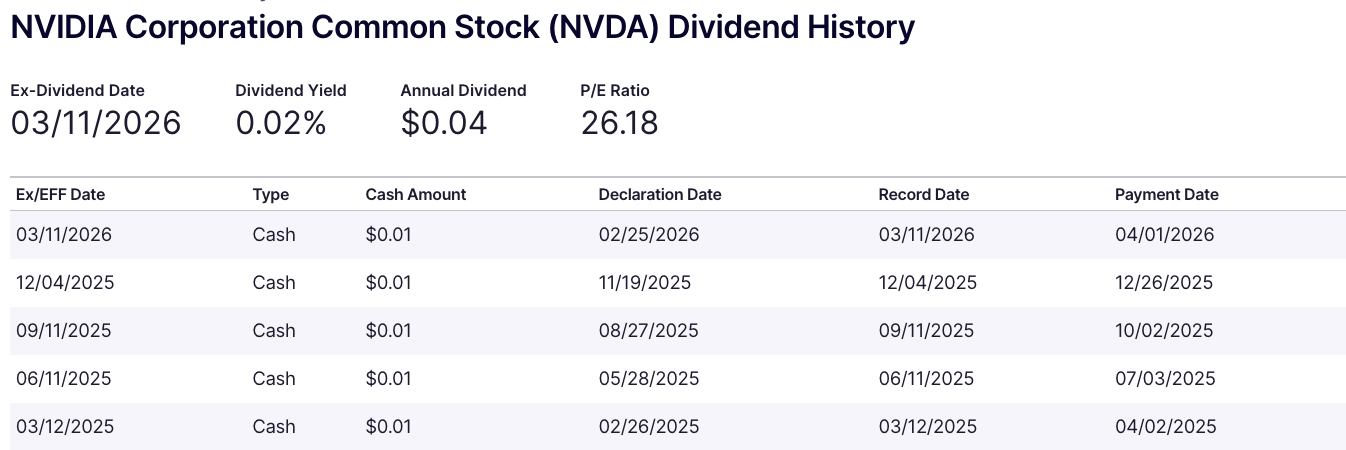
Following this line, an investor who bought 100 shares of NVDA stock at the beginning of 2025 would have only $5 in dividend income by early May 2026.
The investment will be made around NVIDIA’s January 2, 2025 closing price of approximately $138.26 per share, for a total purchase cost of approximately $13,826.
As it stands, NVIDIA currently pays a quarterly dividend of $0.01 per share, and based on recent trading levels near $198, this results in an annual dividend of $0.04 per share, or a dividend yield of approximately 0.02%.
The semiconductor giant maintains a minimal payout policy as it continues to pour significant capital into expanding its artificial intelligence infrastructure and data centers.
From April 2025 to April 2026, shareholders received five quarterly dividends. For an investor holding 100 stocks, the cumulative dividend yield over the period is equivalent to exactly $5.
Although dividend income was modest, NVIDIA’s stock price performance provided a much larger return.
Nvidia stock rises
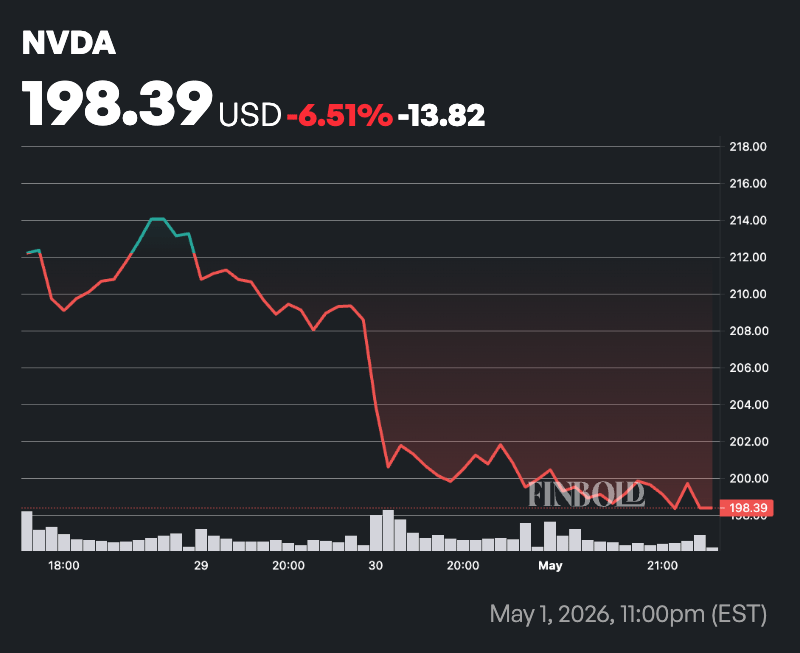
The stock, which started 2025 at around $138, experienced volatility in the first quarter but rebounded sharply on continued optimism around AI demand and semiconductor growth, rising about 40% over the period.
This rise was driven by Nvidia’s dominance in the AI chip market, particularly in the data center sector, which accounts for more than 90% of total revenue.
The sector posted record revenue of about $62.3 billion in the fourth quarter of fiscal 2026, a 75% year-over-year increase as big tech companies ramp up spending on AI infrastructure.
Significant investments from companies like Microsoft, Google, Meta, and Amazon continued to support Nvidia’s growth, while strong demand for its Blackwell GPU platform further boosted investor confidence.
Despite periodic concerns about valuation and broader market volatility, Nvidia maintained its position as one of the biggest winners of the global AI boom.


