


London-based Legal & General Asset Management has made liquid funds available in tokenized form through Karastone’s blockchain-based distribution network, allowing investors to access and transfer fund shares via digital infrastructure as an alternative to traditional payment systems.
According to Wednesday’s announcement, tokenized share classes will be issued with permissions and can be purchased, held and transferred by authorized users within a regulated environment, while traditional share classes will remain available through existing distribution channels.
The fund manages over £50bn of assets in US dollars, euros and sterling, and is designed for capital preservation and same-day liquidity. They invest in high-quality short-term financial instruments such as government bonds, bank deposits, and corporate bonds.
Calastone’s network, part of SS&C Technologies, provides infrastructure for token creation, order routing, trade aggregation, reconciliation and on-chain settlement, integrated with existing transfer agents and fund management systems.
The tokenized version of the fund will initially be issued on Ethereum and other EVM-compatible networks.
Legal & General Asset Management manages around £1.2 trillion of assets across public and private markets, according to the firm, and Calastone says its network connects with more than 4,500 financial institutions around the world.
The move comes as UK regulators work towards a broader cryptocurrency framework, with the Financial Conduct Authority consulting on rules covering areas such as custody and trading ahead of a planned regulatory rollout in 2027.
Related: Ripple partners with Kyobo for tokenized bond payments in South Korea
Tokenized money market funds grow as asset managers expand distribution
Tokenized money market funds are growing as asset managers expand distribution across blockchain networks and trading models.
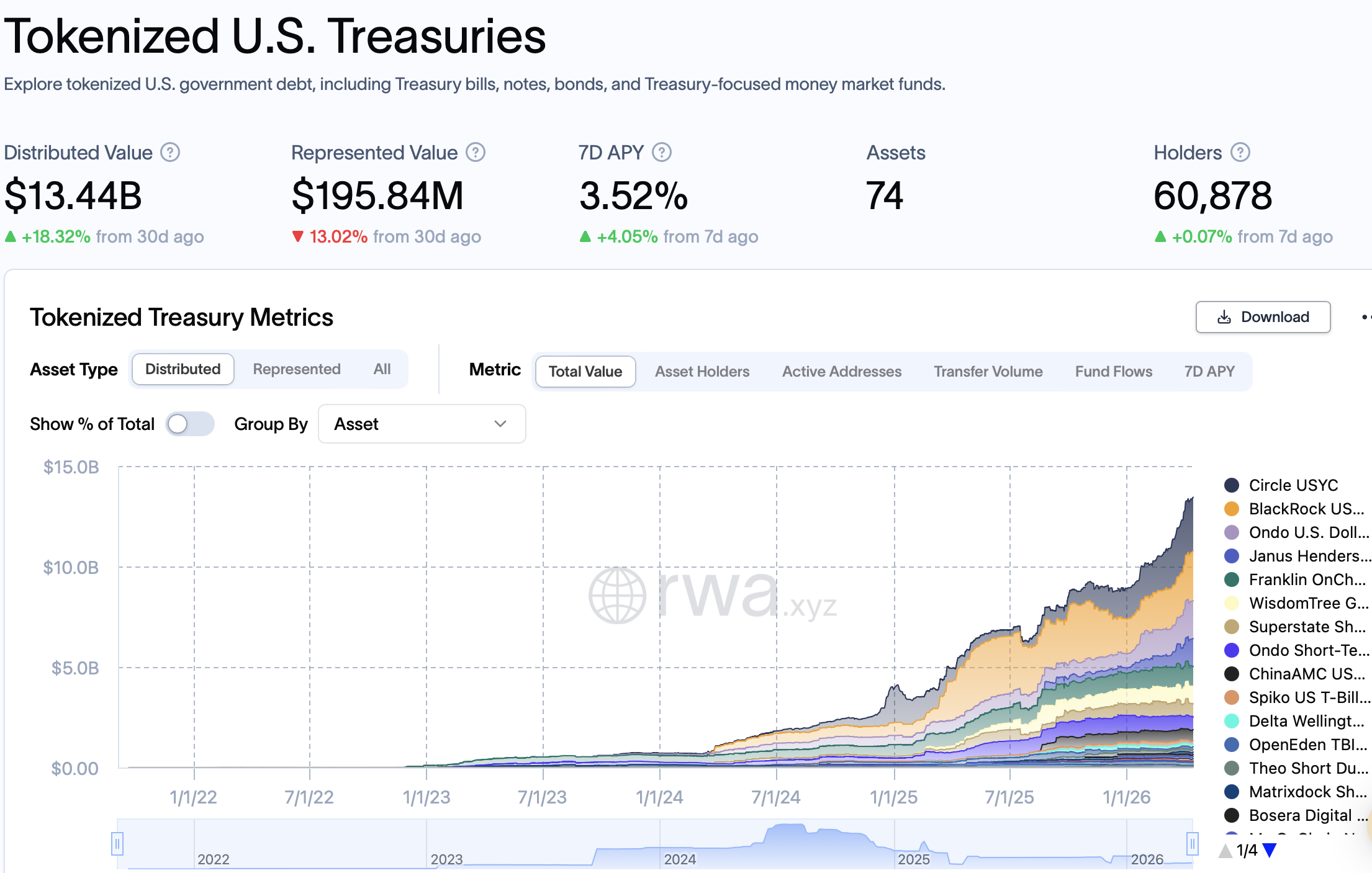
Tokenized U.S. Treasury products, including money market funds, have grown from about $8.9 billion at the beginning of the year to more than $13 billion at the time of writing, according to data from RWA.xyz.
Leading the way is BlackRock’s USD Institutional Digital Liquidity Fund (BUIDL) with about $2.47 billion in assets, followed by Franklin Templeton’s On-Chain U.S. Government Money Fund with about $993 million and WisdomTree’s Government Money Market Digital Fund with about $864 million.
In recent months, asset managers have expanded these products across blockchain networks and trading models.
In November, Franklin Templeton integrated its Benji platform with Canton Network to extend the distribution of tokenized money market funds to the institutional blockchain environment, while BlackRock extended BUIDL to the Solana (SOL) blockchain in March.
In February, WisdomTree enabled 24/7 trading and instant settlement of tokenized money market funds within a regulated framework.
However, as these products expand, new challenges also arise. The Bank for International Settlements has warned that the mismatch between instant token transfers and slow underlying asset settlements could create liquidity and contagion risks.
magazine: Veteran trader Peter Brandt says Bitcoin will not reach $1 million by 2030.


