

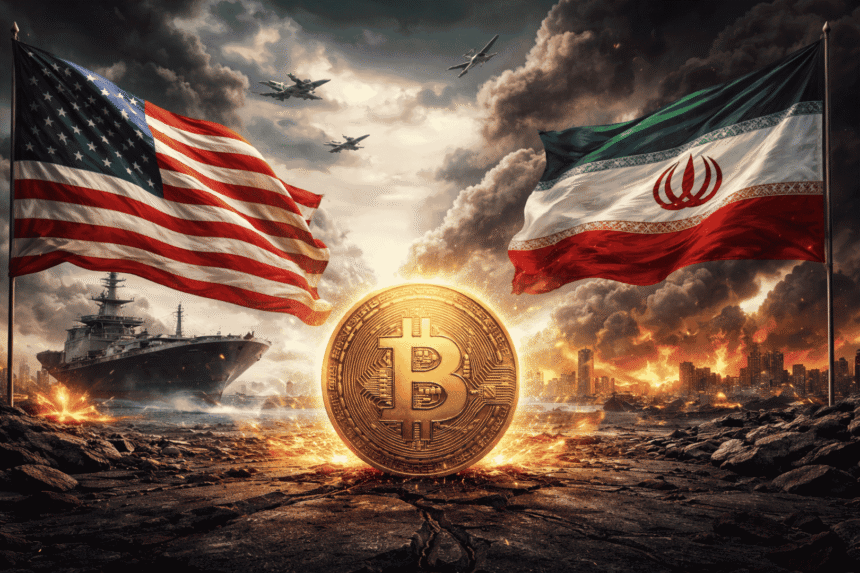
On April 15, 2026, BitMEX co-founder Arthur Hayes published an analysis proposing four possible scenarios arising from a conflict between the United States and Iran and how they could impact Bitcoin (BTC) movement. Its central theme is that, beyond geopolitical outcomes, global liquidity is the determinant of asset prices.
In his essay, No-trade zone, Hayes describes three main scenarios – in addition to the fourth extreme, which he dismissed as “not investable” – they are all related to the development of the conflict around the Strait of Hormuz, a key route for global oil and gas trade. Based on these scenarios, we assess the potential impact on financial markets, and Bitcoin in particular.
War scenarios and economic effects
The first scenario, called “return to normality”, is Prompt cessation of hostilities and return to the original state of affairs that state Previous. In this context, Arthur Hayes believes that Bitcoin could experience a modest rebound, albeit limited by deflationary pressures associated with advances in artificial intelligence, which he argues could impact the employment and spending capacity of developed countries.
The second scenario is He calls this “Tehran’s toll.”proposes that Iran restrict maritime traffic in the Strait of Hormuz and charge fees in currencies other than dollars. If this trend strengthens, it could accelerate the sale of dollar-denominated assets, increase demand for gold and facilitate the use of the renminbi in international trade. Hayes suggests: This process may Weakening the dollar’s hegemony as the reserve currency.
Intermediate scenarios include the possibility of a naval blockade by the United States, which would cause further disruption to energy and energy flows. Market uncertainty will increase. In parallel, it is also considering a strong military response by Washington to restore traffic in the region, but this carries the risk of further escalation and significant damage to the Persian Gulf’s energy infrastructure.
Bitcoin and global liquidity
In such a tense situation, Hayes expects a similar pattern. An initial decline in risk assets, including Bitcoin, followed by an eventual recovery due to economic stimulus. As he explains, governments may have to increase spending and resort to money creation to reduce the economic impact of energy and financial crises.
Similarly, analysts believe that the price of Bitcoin is It is determined mainly by the amount of money in circulationrather than the level of interest rates. In that sense, he argues that an environment of financial expansion, even when combined with high interest rates, could benefit assets with limited supply such as Bitcoin and gold, as reported by CriptoNoticias.
However, he cautions that in the early stages of financial stress, investors often reduce their exposure to volatile assets to cover losses and margin calls. Bitcoin prices may come under downward pressure before they recover.
The analysis also incorporates controversial factors, such as the potential transition to a monetary system less dependent on the dollar and the structural impact of artificial intelligence on employment and credit. Mr. Hayes admits that too. Does not assign a specific probability to each scenario And the approach is aimed at guiding portfolio decisions rather than predicting specific outcomes.
In conclusion, the authors suggest that although geopolitical events may act as a catalyst, Bitcoin’s performance will primarily be driven by central bank responses and the evolution of global liquidity.
(Tag translation) Bitcoin (BTC)


