

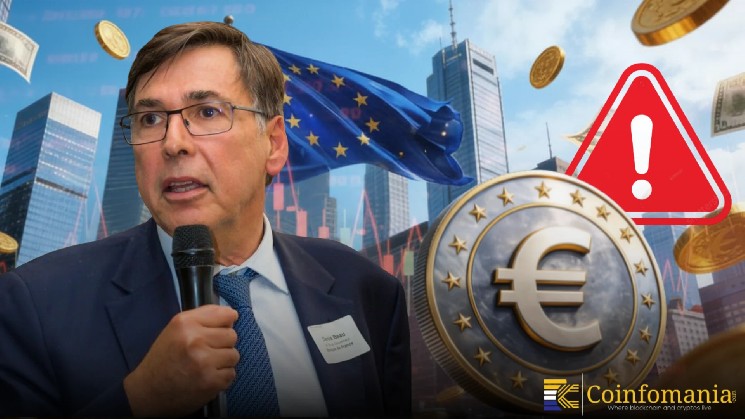
Europe’s financial system is at a critical turning point. Policymakers now see a shift to stablecoins across payment networks. This change raises concerns about governance, sovereignty, and long-term economic stability. Officials are concerned that the world’s digital assets could change the way money moves across borders.
Bank of France executives issued a strong warning. The Vice-Chancellor highlighted the growing “stablecoinization risk” within the European payments ecosystem. He stressed that this trend could weaken the region’s monetary independence. His remarks come at a time when digital currencies are rapidly gaining popularity around the world.
The concerns go beyond innovation. Authorities are now focused on how stablecoins tied to foreign currencies will dominate European transactions. If this happens, Europe may become more dependent on external financial systems. This change could limit the influence of local regulators and central banks.
The debate now centers on balance. Europe must support innovation while safeguarding financial stability. Policymakers need to decide how to regulate stablecoins without slowing their growth. As digital finance reshapes global markets, risks remain high.
🇫🇷 Latest news: Banque de France deputy governor warns of risks of “stablecoinization” and dollarization in European payment systems. pic.twitter.com/4kQnLXclg0
— Cointelegraph (@Cointelegraph) April 10, 2026
Increased adoption of stablecoins raises strategic concerns
Stablecoins continue to gain traction due to their price stability and ease of use. Businesses and consumers prefer these for faster and cheaper transactions. These digital assets make cross-border payments more efficient.
However, this rapid adoption poses serious risks for stable coinization. Many widely used stablecoins are still pegged to the US dollar. This structure makes users dependent on dollar-based digital assets rather than local currencies.
As adoption increases, dollarization in Europe is likely to accelerate. Payment systems could start favoring dollar-backed stablecoins over the euro. This change could reduce demand for the euro in everyday transactions.
Regulators are concerned about the loss of visibility into the flow of funds. Stablecoins often operate outside of traditional banking systems. This gap creates challenges for oversight, compliance, and risk management.
Dollarization trend could reshape Europe’s financial power
The concept of dollarization in Europe is currently at the center of policy debates. If stablecoins become mainstream payments, the U.S. dollar could gain even more global influence. This outcome could weaken Europe’s monetary authority.
The Vice Governor warned that dependence on foreign digital currencies could undermine economic sovereignty. Central banks rely on monetary controls to manage inflation and growth. Stablecoins can upset this balance.
Increased reliance on dollar-backed assets could also affect financial stability. External shocks from the US market could directly impact the European economy. This interrelated risk creates new vulnerabilities.
At the same time, global technology companies are playing an important role. Many private companies issue stablecoins and manage payment platforms. Their influence could challenge traditional financial institutions.
Digital euro emerges as a strategic countermeasure
Europe has already started considering solutions to address these challenges. The European Central Bank continues to develop a central bank digital currency. The digital euro aims to provide a secure and regulated alternative to private stablecoins.
The impact of a digital euro could change the way people transact across Europe. We offer reliable options backed by central authorities. This system ensures compliance with regulatory and financial standards.
Officials believe this initiative will reduce the risks of stablecoinization. Providing a reliable digital currency allows Europe to maintain control of its payments system. Its goals include maintaining financial sovereignty while embracing innovation.
However, adoption remains a significant challenge. Users should be aware of the clear advantages over existing stablecoins. Success is determined by convenience, speed, and accessibility.
final point
Europe is at a crossroads in the evolution of digital finance. Stablecoins present both opportunities and risks. Its growth highlights the need for strong regulatory frameworks and strategic innovation.
The Banque de France’s warning shows urgency. Policymakers must act to prevent over-reliance on foreign digital currencies. The balance between innovation and control will determine Europe’s financial future.


