

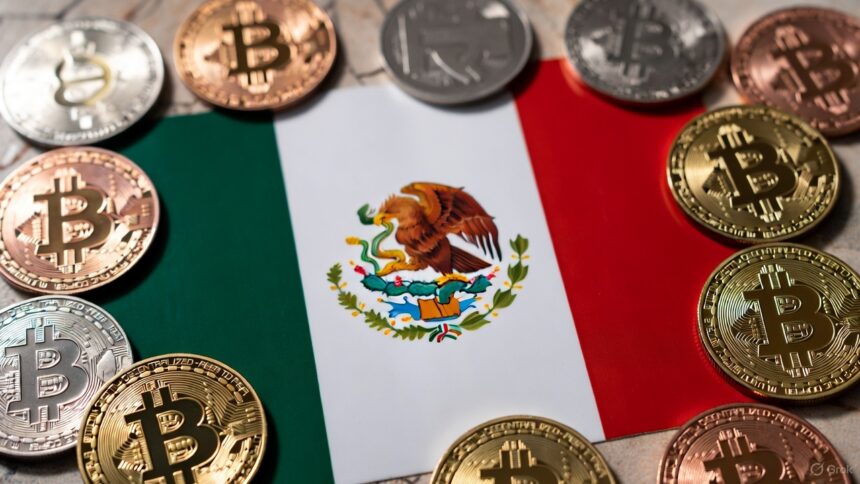
The Supreme Court of the Nation (SCJN) has established a new precedent in financial oversight in Mexico that directly impacts the use of Bitcoin (BTC) and other digital assets.
By constitutionally declaring the powers of the Financial Intelligence Agency (UIF), Block bank accounts without prior court orderthe court grants the executive branch the power to immediately intervene in the assets of citizens. This process has previously relied strictly on a judge’s permission.
This resolution, issued on April 6 of this year after analyzing the unconstitutionality case 58/2022, overturns the court’s own previous standards. Previously, these administrative blocks were only valid In response to requests from foreign institutions.
The new ruling therefore allows the FIU to act autonomously in cases of suspected local criminal origin. To comply with Financial Action Task Force (FATF) international standards To prevent money laundering.
In practice, this administrative change changes the order of proceedings, first implementing the freezing of funds and then granting the right to a hearing. The SCJN’s official statement said the measure would remain in effect as long as it was “based on indicators of illegal operations and respects the right to defense.”
This therefore means that affected users will have to appear before the Ministry of Finance to prove the legal origin of their money, a process that takes place in the administrative sphere before challenging it in court.
How will this measure affect Bitcoin users?
For Bitcoin users, this measure Directly affects the “exit” to the fiat system. Mexican fintech laws already classify operations with virtual assets as vulnerable activities, requiring Bitcoin exchanges and other crypto assets to report transactions that exceed certain thresholds.
Currently, virtually all Bitcoin or stablecoin purchase/sale operations on Mexican exchanges must be reported monthly to the UIF through Mexican tax authorities.
However, with FIU’s new power, Transfers from these platforms to bank accounts that are considered suspicious You can immediately block them without a public criminal investigation or a judge’s signature.
This ability created contradictory positions. While the government says agility is essential to protect the financial system from criminal activity, civil society groups and opposition politicians say the measures weaken judicial control over acts of power.
In this new scenario, the burden of proof shifts to the account owner. You need to manage the release of resources Access to the banking system remains suspended, but through administrative procedures.
Meanwhile, in the Bitcoin and cryptocurrency community, users have raised concerns as many rely on bank accounts to convert their crypto assets to Mexican pesos and vice versa. Among the critical voices, ecosystem analysts at BtcAndres stand out, who warned of the risks for Bitcoin users in the country.
The resolution comes amid increasing integration between crypto assets and Mexico’s banking system. As reported by CriptoNoticias, in November 2025, the Bitget exchange launched the ability to directly convert USDT and USDC to Mexican pesos and send them to over 35 local bank accounts through the SPEI system. According to the company, the tool aims to facilitate everyday payments, transfers, and settlements without relying on P2P operations.
(Tag translation) Bitcoin (BTC)


