

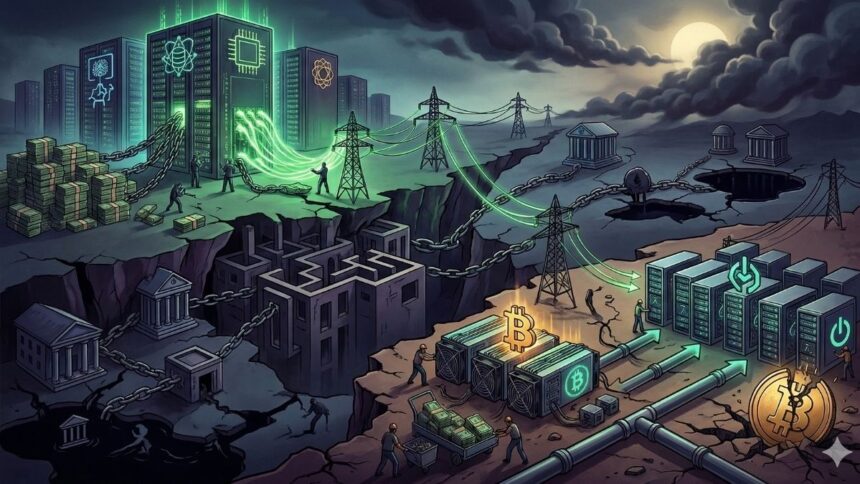
The Bank for International Settlements (BIS) has conducted a detailed analysis of how US technology giants such as Amazon, Alphabet, Microsoft, Meta and Oracle are financing the massive construction of data centers needed for artificial intelligence (AI).
These large companies are is known as hyperscalerhas increased spending on new technology beyond its normal cash flow, forcing it to rely more on debt markets.
According to the document, in 2025 Total amount of corporate bonds (debt instruments issued by these companies to raise their own funds) issued Reached record high of over $100 billion.
Because most bonds have maturities of five years or more, this is debt that is not viable in the short term, allowing companies to secure funding for infrastructure construction projects that take years to complete. This coincides with the construction period of an AI data center (5-10 years).
However, this visible debt is that’s just part of the story. To prevent financial balance sheets from becoming overloaded with debt, technology companies have perfected alternative financing methods that hide real risks from investors.
“Shadow debt” and off-balance sheet structure
The main mechanism these companies are using is what BIS calls. Shadow borrowing Or shadow loans. This system is a joint venture (joint venture) or special purpose vehicles. Purchase or develop a data center.
In this scheme, the technology company typically holds a minority stake in the property, but capacity purchase agreement (offtake agreement); or long-term operating lease agreement. This means that rather than borrowing money directly to purchase servers, the company promise to pay a monthly fee You should keep these servers in use for years.
From an economic perspective, these contracts function just like debt, providing a fixed future payment obligation. However, accounting terminology allows companies to substitute for immediate capital expenditures (Capital investment) due to operating costs distributed over time (opex), maintaining the majority of the debt. removed from main balance sheet.
The debt that technology companies acquire through these specialized vehicles is primarily financed by raising private capital. As described by BIS, participants in this market generally include: Other institutional investors such as private credit funds and insurance companies.
For this model to be attractive, the liability is typically backed by an asset (the data center itself). contractual guarantee Signed by technology companies. This often allows the debt on these vehicles to receive an “investment grade” rating due to the creditworthiness of the technology company behind the lease agreement.
Dangerous signs are already appearing in the market
Despite this increased sophistication of structures, the market has begun. show signs of nervousness. According to the BIS report, the debt credit default swap (CDS) -A contract that protects against default- increased significantly As for AI technology.
In fact, from November 2025 to January 2026, the cost of CDS (such as Oracle) increased by up to 200%, according to Reuters data.
In that sense, it’s worth remembering that the CDS acts as a thermometer of confidence. Because rising prices for these policies means the market perceives a greater risk of nonpayment or bankruptcy.
Therefore, in the context of AI infrastructure, this increase in CDS spreads creates uncertainty as to whether large-scale investments in data centers are required. will generate much-needed profits To cover the loan.
This increased risk has the following direct effects: private credit:
- Pressure to refinance: If CDS continue to rise, shadow lenders will face higher costs when renewing their credit facilities, creating liquidity strains.
- Risk link: As the main buyers of this bond are private credit funds and insurance companies, increased risk perception could cause these investors to withdraw capital (redemption), impacting the stability of the infrastructure finance sector as a whole.
- Warranty activation: If the solvency of technology companies deteriorates significantly, the contractual guarantees these companies have signed to support their investment vehicles could be triggered, forcing them to cover losses beyond their planned budgets.
The biggest danger lies in the financial interconnections this model creates. Commercial banks provide credit facilities to these private investment vehicles, creating new risk channels.
The model may become unexecutable
Despite all these risks, for now, the AI industry aims to continue progressing in the short term (2026-2027). However, without rapid and large-scale monetization, current funding models may not be viable in the medium to long term.
If the AI sector slows down, there is pressure to refinance these vehicles, or technology companies are forced to honor the guarantees they have signed; May cause systemic shock. Such facts will impact both companies as well as private credit funds and insurance companies that are supporting the rise of artificial intelligence today.
and, we can’t talk about the impending crisis yetif AI does not immediately provide economic value commensurate with expenditure, the boom has already entered a “more dangerous stage” with a higher level of risk. Therefore, BIS and the majority of analysts conclude that this debt is only “sustainable” as long as the outstanding balance continues. hyperscaler Be strong.
(Tag translation) Bitcoin (BTC)


