


Ethereum plans to improve scalability, decentralization, and privacy with this year’s Gramsterdam and Hegota upgrades.
This upgrade is comparable to Cardano’s Midnight Sidechain, which has similar goals.
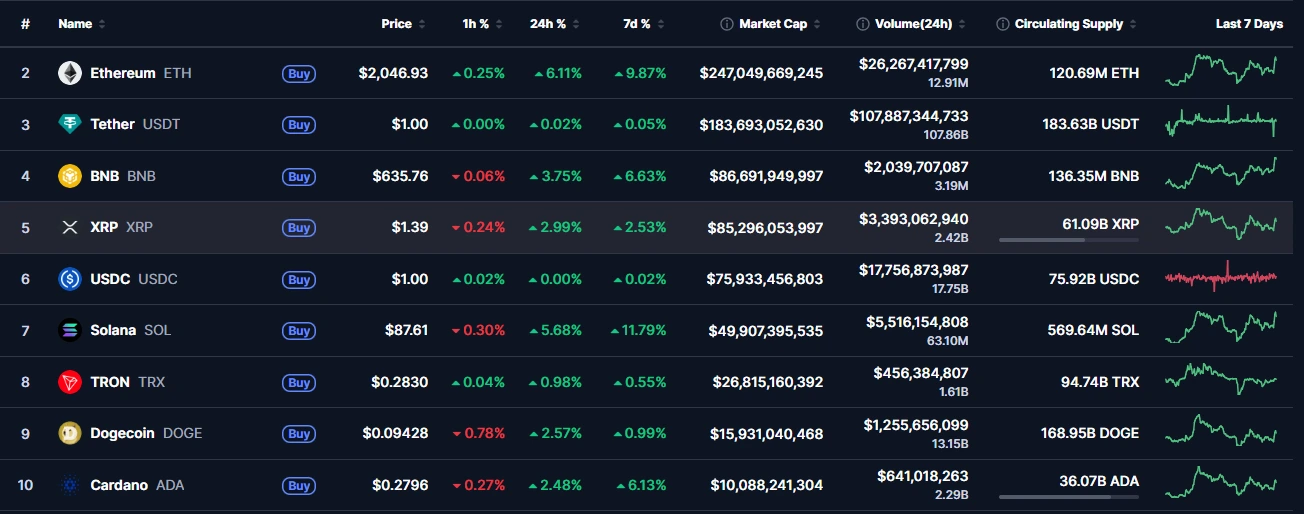
Amid the recent market-wide bailout rally, ETH and ADA have shown positive price action.
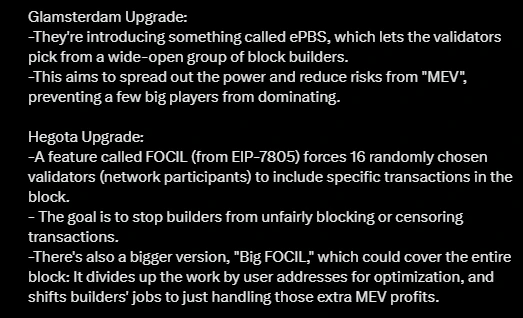
Ethereum plans to implement Proposer and Builder Separation (ePBS) and Fork Choice Forced Inclusion List (FOCIL) within this year’s Gramsterdam and Hegota upgrades. Both aim to maintain network decentralization and scalability while improving speed, privacy, and security.
PBS will first roll out at Gramsterdam Fork, scheduled for early this year. This feature further separates block builders and validators on Ethereum and prevents large validators from monopolizing and profiting from selected transactions. This is a concept called Maximum Extractable Value (MEV).
Meanwhile, FOCIL (EIP-7805), scheduled for the second half of 2026, will force 16 randomly selected validators to include certain transactions in a block. This prevents transactions from being blocked or censored due to perceived profitability.
Ethereum rivals Cardano in network development
In early 2026, Ethereum’s MEV rose to around $24 million in one month. While profitable for validators, revenue-driven approaches such as front-running and sandwiching have led to network congestion and higher gas bills for users.
PBS decentralizes validator power and reduces the MEV centralization typically associated with large-scale validators. The larger version of FOCIL (simply referred to as “Big FOCIL”) provides the same benefits as the parent version, only on a larger scale.
Source:X
Rival chain Cardano plans to offer similar benefits with its upcoming Midnight sidechain. The chain leverages a dual tokenomics system that allows users to hide sensitive information such as account transactions and balances. This development separates private and public computation, reducing congestion on Cardano and effectively reducing gas fees. Midnight is also regulatory compliant, facilitating adoption by privacy-conscious institutions.
Source: CoinMarketCap


