

Bitcoin plummeted on February 27 as geopolitical tensions escalated, and after several days of trying to recover towards $70,000, the price returned to around $65,200. The decline came as US President Donald Trump threatened a “friendly takeover” of Cuba, and at the same time the US government strengthened its military posture in Israel.
The mixed headlines have brought new uncertainty to global markets. Crypto, who was stabilizing, quickly responded.
BREAKING NEWS: Donald Trump hints at a possible “friendly takeover of Cuba” as the White House seeks to exploit Cuba’s energy crisis to exert more influence. pic.twitter.com/xDHEDsvF5U
— BeInCrypto (@beincrypto) February 27, 2026
President Trump says he might make a friendly purchase of Cuba
In his speech today, President Trump said the Cuban government was “facing big problems” and “talking to us,” adding that the United States could pursue a “friendly takeover.” He portrayed Cuba as financially desperate and open to negotiation.
The comments follow weeks of mounting pressure. Since returning to office in January 2025, President Trump has reinstated and expanded maximum pressure policies against Havana.
In late January 2026, he signed an executive order declaring a national emergency regarding Cuba and threatening to impose tariffs on countries that supply Cuba with oil.
This move effectively created an oil blockade. Cuba is heavily dependent on fuel from Venezuela and Mexico. After U.S. pressure halted shipping, the island faced rolling blackouts, airport fuel shortages and widespread economic stress.
The New York Times confirmed that the US military has imposed a naval blockade against Cuba.
This is an act of war. The Trump administration has illegally seized oil tankers attempting to supply fuel to Cuba.
This is a barbaric medieval siege aimed at starving millions of Cubans into submission. pic.twitter.com/dHQnYLdYVI
— Ben Norton (@BenjaminNorton) February 22, 2026
How the Cuban Missile Crisis Escalated
Tensions escalated this week following a deadly maritime disaster. Cuban troops seized a U.S.-registered speedboat near territorial waters. Four people died in the exchange.
Havana described the group as armed intruders. Washington denied involvement but launched an investigation.
Meanwhile, the Trump administration temporarily allowed limited humanitarian oil flows through private channels.
However, broader economic pressures remain.
Against this background, the term “friendly acquisition” carries weight. That likely means a negotiated political transition under U.S. influence, rather than a military invasion.
Still, words are delicate. For more than 60 years, Cuba has built its identity around resisting U.S. influence.
President Trump on Cuba: “Cuba is a failed state right now…We’re talking to Cuba right now. We’re having Secretary Rubio talk to Cuba right now, and we should definitely come to an agreement because it’s a real humanitarian threat.” pic.twitter.com/0o1D6mv5ZJ
— BeInCrypto (@beincrypto) February 17, 2026
US military buildup in Israel
At the same time, the United States is increasing its military presence in Israel amid rising tensions with Iran.
Advanced combat aircraft and additional assets are being deployed to the region. The State Department also allowed non-essential diplomatic personnel to leave the country.
🚨🇮🇱🇺🇸 11 of these beasts land in Israel, US F-22 Raptor jets
this is important
This is the first time in history that the US will deploy fighter jets to mainland Israel for a combat-oriented operational mission rather than joint exercises and training pic.twitter.com/FIPwAgkWo7
— Mario Nawfal (@MarioNawfal) February 24, 2026
Officials have described this stance as a deterrent, but markets see it as an increase in geopolitical risks. The Middle East and the Caribbean are currently under a simultaneous US pressure campaign.
Bitcoin responds to global risks
Bitcoin was on the verge of regaining $70,000 in recent sessions. Instead, it quickly reversed, falling more than 3% in 24 hours. This move suggests traders are reducing their risk exposure.
Cryptocurrencies often react to macro uncertainty in two steps. Initially, liquidity will be tight and prices will fall. Then, if the situation continues to be volatile, some investors will switch to Bitcoin as a hedge.
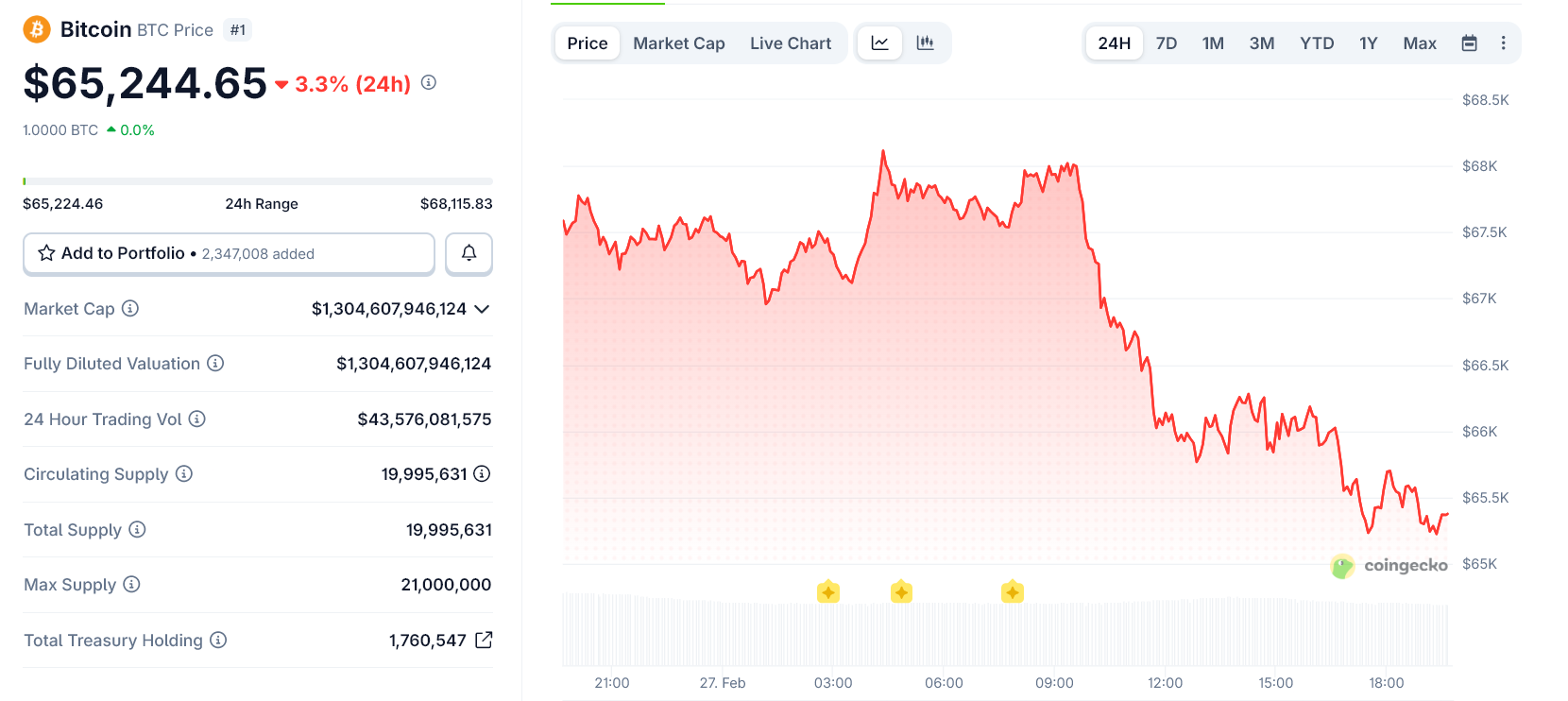
Bitcoin plummets again amid geopolitical concerns. Source: CoinGecko
For now, the market appears to be in the first phase.
Volatility is likely to remain high as geopolitical tensions escalate on multiple fronts. Bitcoin’s next move will likely depend on whether diplomatic channels calm the situation or whether escalation continues.
The post Post Trump Takes over Cuba, Iran War Tensions Rise, Bitcoin Falls Again appeared first on BeInCrypto.


