

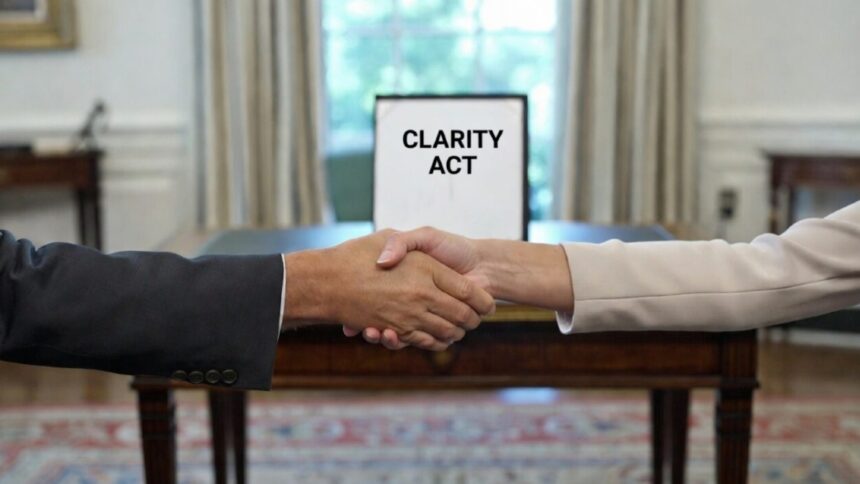
The regulatory landscape for digital assets in the United States may become clearer. A consensus is emerging between bankers and crypto entrepreneurs regarding the benefits of stablecoins, which could pave the way for approval of the Clarity Act.
A third high-level meeting will be held at the White House this Thursday, February 19th at 9 a.m. ET, and this may be the last effort to finalize the technical details of the regulation. this Attempting to redefine the structure of financial markets Provides legal security to companies in the cryptocurrency field.
Journalist Eleanor Terret said the conference will be attended by a select group of industry representatives and bank executives. Among them is Paul Grewal, Coinbase’s legal director. Ripple’s Stuart Alderotti and a16z’s Miles Jennings. These also include figures for the banking sector and crypto trading.
Despite the tensions of recent weeks, optimism about the deal appears to be returning. Coinbase CEO Brian Armstrong has previously balked at certain aspects of the project, but on Wednesday, February 18, he suggested that a deal is closer than ever. After intense negotiations involving various stakeholders within the ecosystem, Armstrong emphasized: Progress is tangible and we are moving towards a mutually beneficial scenario.
The executive said on his social networks that the market structure has improved by leaps and bounds and is confident of achieving a “win-win-win result.” For Armstrong, This law will represent a victory for the crypto industrya win for banks and a win for American consumers.
In an interview with CNBC, Armstrong said of past conflicts: They were not attempts to blockbut the quest for sustainability. He also said that a major impasse centering on stablecoin compensation regulation has forced all parties to return to the negotiating table to amend the bill.
Armstrong’s position has been echoed by major organizations in the crypto space, including the Blockchain Association. Its director, Summer Marsinger, supported this consensus view. He also declared that They will continue to work with members of both parties. Establishing rules that foster innovation and encourage consumers.
Banks are also looking forward to an agreement. They maintain a position against the interests of stablecoins, arguing that stablecoins could destabilize the banking system through deposit outflows of up to US$6 trillion.
Banking industry insiders say they consider the proposal from the Digital Chamber of Commerce to be “constructive,” which would allow payment stablecoins to gain profitability through a DeFi liquidity exemption.
And on the government side, which had been acting as a mediator, expectations turned into a sense of urgency. Treasury Secretary Scott Bessent expressed the need for the Clarity Act to become a reality “this spring.”
Additionally, he criticizes areas such as: They prefer to operate in a legal vacuum, making the country less competitivecalls them “rebellious actors.” As reported by CriptoNoticias, it has even suggested that other jurisdictions, such as El Salvador, are available to those who do not want to submit to U.S. oversight.
This Thursday’s meeting could signal a possible resolution of legal uncertainty in this area. If the parties are able to finalize an agreement, the United States would move into a legal framework that: Integrate your digital financial infrastructureIt could be enacted as early as April.
(Tag Translate) Banking and Insurance


