

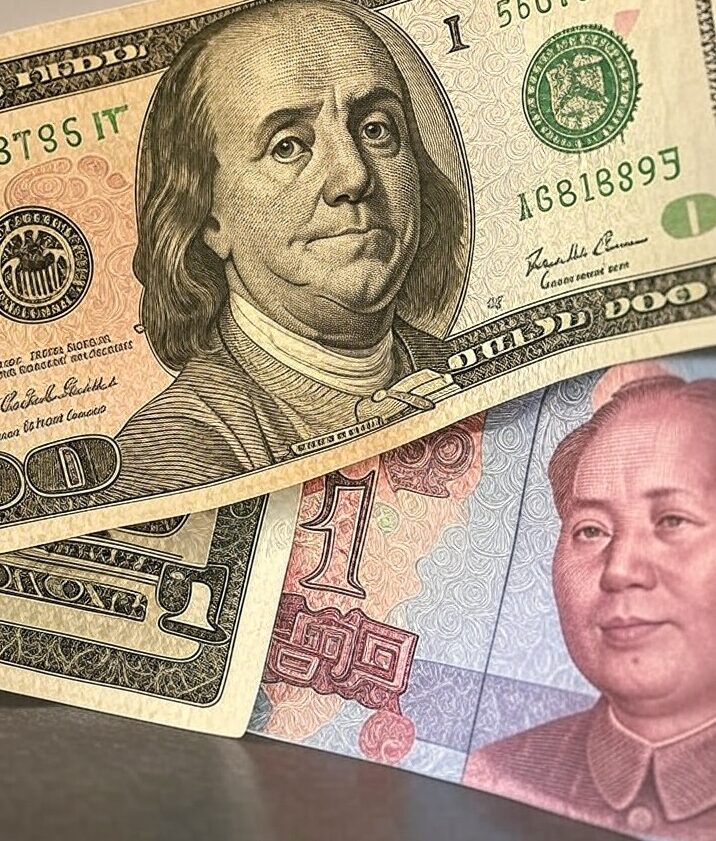
Chinese regulators have asked the country’s major banking institutions to reduce their reliance on U.S. Treasuries.
The guidance, which has been passed on verbally in recent weeks and was reported by Bloomberg on February 9, Aims to reduce concentration risk and protect banks’ balance sheets from volatility This is unique to the Washington bond market.
The advisory does not affect the Chinese state’s vast public holdings, but it stems from growing concerns about the potential for large swings in U.S. debt prices. The most obvious objective to be achieved would not be to facilitate immediate mass sales of these assets, but rather to promote risk diversification within China’s banking system.
This measure is part of a trend that can already be observed. This is an official holding China’s US Treasury holdings reached $682.6 billion As of November 2025, it was one of the lowest levels in a decade, according to U.S. Treasury data.
This figure is only 2.4% of the total government debt in circulation (estimated at $28.86 trillion).
The results of this guideline have focused attention on overseas government debt demand. This is because if Chinese investors gradually reduce their buying, it could put upward pressure on long-term yields. The 10-year bond yield was 4.22% on February 6, 2026, and approximately 4.18% on February 10, but it may be affected by changes in demand trends.
In any case, China’s recommendations to its banks are part of ongoing risk diversification, but they come in an environment of financial and strategic tensions exacerbated by President Trump’s plan to increase military spending to $1.5 trillion in 2027.
Therefore, this guidance reflects concerns about further deterioration in the volatility of US assets. Washington’s spending expansion policy and tariffs create uncertainty in global marketsas reported by CriptoNoticias.
Stablecoins find new buyers to compensate for China’s withdrawal
The suggestion that Chinese banks reduce their holdings of U.S. Treasuries could signal a temporary gap in demand for U.S. Treasuries, pushing yields higher and making borrowing more costly for the U.S. government. However, other market observers have highlighted that the explosive growth of stablecoins, especially the huge demand for Tether, is acting as a partial offset.
That’s because every new dollar added to a stablecoin requires more government bonds (or cash) to back it. Create continuous and growing alternative buyers. Therefore, while China diversifies, the stablecoin sector will absorb some of that supply, contributing to stabilization of the U.S. Treasury market and mitigating a significant impact on liquidity and funding costs.
That’s why, despite China’s concerns, the U.S. bond market remains at a record level of $9.4 trillion in foreign holdings as of November 2025.
Countries such as Japan and the United Kingdom have overtaken China as the largest holders of U.S. debt, and Treasury volatility remains lower than in the past, suggesting markets have the ability to absorb these strategic moves at this time.
(Tag Translate) Banking and Insurance


