

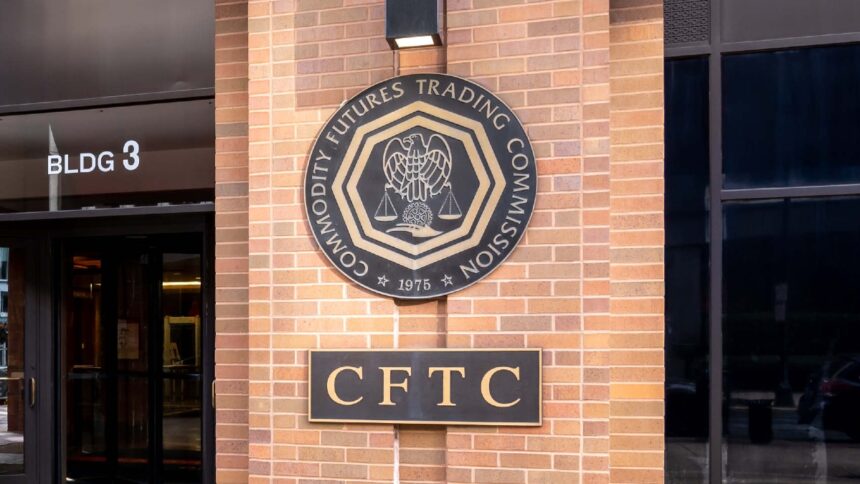
The U.S. Commodity Futures Trading Commission (CFTC) has announced steps to formally expand the definition of a “payment stablecoin.” The Market Participant Department (MPD) has listed the National Bank as an authorized issuer of these digital assets.
This decision is established by the reissuance of the 25-40 No-Action Letter, allowing the financial institution in question to issue its own stablecoin. These are accepted as margin guarantees In futures market operations.
CFTC Chairman Michael Selig emphasized the following regulatory updates: It aims to integrate national banks into the digital asset ecosystem.
“During President Trump’s first term, the Office of the Comptroller of the Currency (OCC) made history by establishing the first national trust bank with the authority to store and issue payment stablecoins,” Selig noted.
The measure builds on the recently enacted GENIUS Act, which establishes an eligible collateral framework that positions the U.S. as a “world leader in payments stablecoin innovation,” according to the official.
The technical review corrected a previous omission that did not explicitly consider trust banks and now allows them. Its assets serve as collateral for segregated customer accounts.
Payment stablecoins are a type of stablecoin that is specifically designed to function as a means of payment or settlement in everyday transactions, money transfers, and commerce while maintaining a stable value.
Unlike stablecoins, which are primarily used as stores of value or bridges for cryptocurrency transactions, payment coins prioritize features such as payment speed, low costs, 24/7 availability, cross-border transfers without intermediaries, and redemption guaranteed by the issuer (e.g., Circle’s USDC, Tether’s USDT, or EURC, which are primarily used for payments).
Conflict of interest between stablecoins and traditional banking
The regulatory advance comes amid heightened tensions in Washington. Representatives from the crypto sector and the traditional banking industry recently held a meeting at the White House to discuss the CLARITY Act. This is an attempt to remove obstacles to the enactment of the proposed regulations. The main obstacle to this bill is Financial performance of stablecoins.
President Donald Trump’s administration would have given them an ultimatum to reach an agreement on interest payments by the end of February.
Currently, U.S. banks hold approximately $18.61 trillion in deposits (based on January 2026 Federal Reserve Board data). traditional banking model Rely on financing with zero or low returns (nearly 0.5%) reinvested in government bonds.
Therefore, according to the bank, a stablecoin that provides benefits directly to users means: It is a threat to this structure. Fearing a large-scale outflow of up to $6 trillion in deposits, lobby Banks ask for limits. In response, the digital asset industry has proposed diversifying the storage of reserves at local and community banks to reduce the impact on the system.
The resolution of disputes over stablecoin interests will be critical to the mass adoption of tokenized dollars and the stability of liquidity flowing into the Bitcoin market. In this past year, Regulatory clarity appears to be a priority for U.S. economic policy.
(Tag Translate) Banking and Insurance


