

The U.S. Securities and Exchange Commission (SEC) issued a joint statement on tokenized securities on January 28, 2026. This document was created by the Department of Corporate Finance, Investment Management, Trading and Markets and clarifies the application of federal securities laws to tokenized assets.
The statement said the form in which the securities are issued does not affect the application of federal securities laws. The agency defines Tokenized value as a financial product It is represented as a crypto asset and ownership is registered, in whole or in part, on a blockchain or multiple crypto asset network.
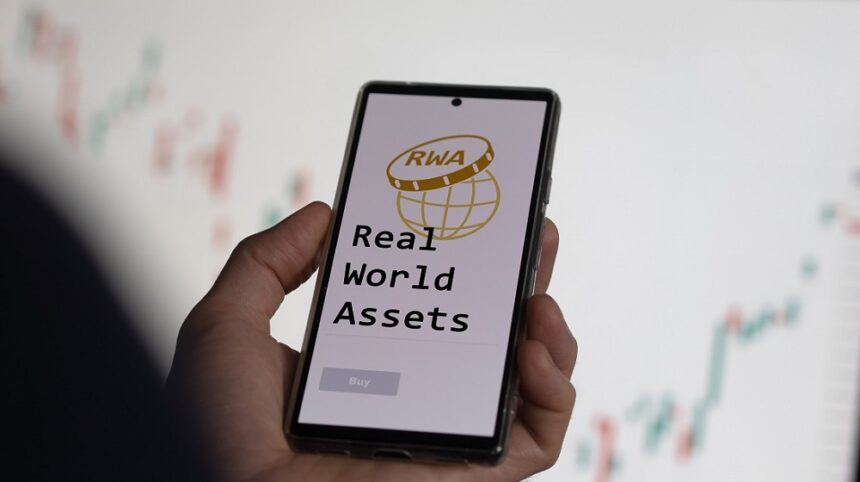
This is a real-world asset or RWA (real world assets) Enables groups of investors to take collective ownership through asset tokenization and trading.
As explained by CriptoNoticias Cryptopedia, these are cryptographic tokens that represent tangible assets that exist outside the digital realm. These include works of art, real estate, raw materials or goods. It also represents intangible assets such as bonds, patents, copyrights, credits, and interests.
Meets the same standards as traditional values
The SEC requires that tokenized securities issued by or on behalf of an issuer Continue to be subject to the same regulatory obligations as securities Traditional. This includes registering the offering and sale or obtaining exempt status under securities laws, periodic disclosure and investor protection.
The agency explains that if the issuing company itself (for example, a company issuing stocks or bonds) decides to use a distributed ledger (DLT) to track the owners of those securities, there are two main ways to do so.
- In the chain (On-chain), when the blockchain becomes the official record of ownership.
- Off-chain (off-chain) This is when the blockchain acts only as a token or auxiliary copy, and the main record remains a traditional record (paper, private database, or software).
In both cases, we see agency in action. As a technology update. And he clarifies this as follows: the law doesn’t change anything. This security is still a regulated security, and companies must follow exactly the same registration, disclosure, and investor protection rules as they would without blockchain.
Tokenized securities with third party sponsors
The SEC has identified two models observed in the market for cases in which securities are tokenized by third parties unaffiliated with the issuer.
The first is the storage model. In this model, a third party stores the underlying securities (often through a designated custodian); Issue tokenized assets representing claims or rights Use that value indirectly. In this case, the token holder does not own the original financial instrument directly, but rather owns the interest through a third party.
The second model is a synthetic model, in which a third party issues a proprietary product that provides economic exposure (variation in price, performance, or related events) to a reference security. all this without granting any ownership or rights. such as voting rights, dividends, or access to information about the underlying issuer.
The agency warns that these two models expose owners to further risks, including third-party insolvency. Direct holders of original value are not affected. However, they continue to be classified as securities (or regulated derivatives) under federal law, with registration requirements or exemptions and disclosure requirements.
This document clarifies that its contents are based on the input of staff involved in the development of this recommendation and do not constitute official standards of the Commission. Therefore, invite formal consultation Go to the corresponding department.
Tokenization attracts worldwide attention
This SEC ruling The moment when tokenization on Wall Street becomes popular. Major financial institutions such as JPMorgan and Citadel are already immersed in infrastructure development. On-chain He covers traditional securities and participates in recent regulatory discussions.
The clarity provided by US authorities aims to facilitate regulatory compliance in this emerging area without compromising the fundamental framework of investor protection.
According to a report by CriptoNoticias, this theme is part of a growing trend in adoption, as revealed at the recent World Economic Forum in Davos.
While the tokenization of real-world goods and assets is gaining momentum, it is clear that regulators continue to take a hard line. they claim that Economic substance and investor protection always take priority About technical form.
(tagtranslate)US


