

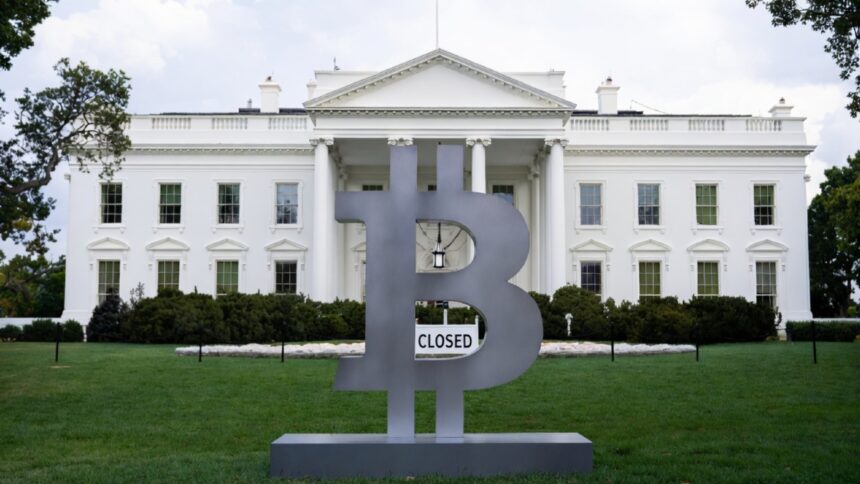
The Bitcoin market would have started to react to political and social instability in the United States.
Data reflected in prediction market platforms such as Polymarket suggests that the U.S. government will face a new partial shutdown (so-called shutdown) rose to 73% before January 31st. This can be seen in the following graph.
This spike in expectations for administrative paralysis comes amid heightened tensions following violent incidents involving federal forces.
The trigger for this recent uncertainty was a violent incident that occurred on the streets of Minneapolis, Minnesota, on Saturday, January 24th. A 37-year-old man was shot five to seven times by Immigration and Customs Enforcement (ICE) agents, killing him instantly.
The person resisted authorities’ attempts to disarm him, according to a report provided by the Department of Homeland Security (DHS). He was carrying a 9mm semi-automatic handgun and two magazines..
Border Patrol Commander Gregory Bovino described the actions of the agents involved as “defensive firing.” It claims the officer feared for his integrity and that of his colleagues.
However, this event caused a wave of doubts. While authorities have defended the legality of the law, social groups and local activists have staged protests, calling the incident an “execution” indicating the use of deadly force by federal agents.
The incident has deepened political divisions in the North American country, complicating budget negotiations and increasing the risk that no deal can be reached in Congress. To fund government activities on timethat is January 31st of next year.
Bitcoin and its role in uncertainty
In theory, Bitcoin is often perceived as a haven of value, an asset that should be strengthened in the face of instability in state institutions. Under this assumption, if the government shows signs of dysfunction, investors will seek to protect capital outside the traditional financial system.
but, Market realities dictate a variety of actions. In situations of high uncertainty, many investors choose to liquidate positions in volatile assets in order to seek liquidity. In this way, they have treated digital currencies as more of a risk asset than a haven.
Data from the government shutdown that occurred between October and November 2025 shows this. In fact, they demystify BTC’s role as protection in America’s systemic crisis.
According to the graph below, assets could not provide stability during the stage of political crisis. But extreme volatility.
We can see that at the start of the shutdown on October 1, 2025, prices experienced the first increase caused by the evacuation story. It also triggered a new all-time high for digital assets. It reaches $125,800.
However, that enthusiasm didn’t last long. Shortly after, the price of BTC plummeted to $98,000, with the gains dissipated as the market digested macroeconomic uncertainty and other more important factors affecting asset prices.
After the end of the conflict on November 13, the dynamics of digital assets worsened further. Once the government was re-established, the price continued its downward trend and reached $80,600. Negative performance compared to pre-conflict levels.
These data, due to their extreme volatility, Bitcoin did not serve as a safe haven during the last government shutdown. The current price is $88,724, according to the CriptoNoticia price calculator, suggesting the market could repeat this volatile pattern if the U.S. government eventually shuts down again. Other factors, such as Bitcoin’s past four-year patterns and institutional capital inflows and outflows, could exacerbate or mitigate this event.
(Tag Translation) Bitcoin (BTC)


