

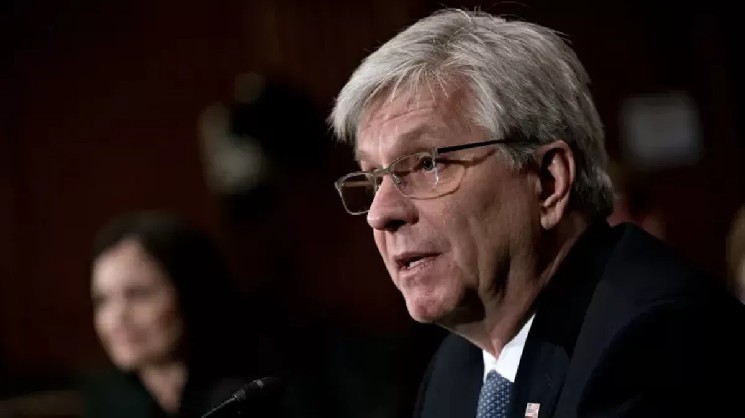
Nick Timiras, an experienced economics reporter for the Wall Street Journal, was called “Fed spokesman” and shared the latest statement to the public by Fed board member Chris Waller. Waller’s statement shows that he has a more incredible attitude than the general discourse within the Fed.
Waller considered two different scenarios taking into account the current economic situation and the potential impacts of trade tariffs in particular, namely the high and low tax scenarios, Timiraos reported.
High tariff scenario: temporary inflation, recession risk is more important
According to Waller, if tariffs are maintained at an average of 25%, this could raise core PCE inflation from 4% to 5% in 2025. However, Waller argues that this effect is temporary, and that the Fed “sees” such temporary inflation pressures, “sees” such temporary inflation pressures, and cites the continued continued financial policy stance, expectations of stable expansion, and a significant slowdown in economic pressures.
Waller said in this scenario the Fed could cut interest rates faster and faster than expected if necessary, saying, “Even if inflation is above 2%, if the economy is slowing rapidly, the risk of a recession outweighs the risk of short-term increases.”
Referring to policy errors for the 2021-2022 period, Waller said, “It would not be right to completely ignore similar analysis because things weren’t expected during that period.”
Low work scenario: lower inflationary pressures, more limited intervention
Waller said that for a more moderate trade policy, that is, if the basic 10% tariffs are maintained and other tariffs are removed, the increase in inflation will be much more limited, in which case the peak inflation rate will remain at about 3% per year. He said that inflation effects could appear more slowly in this scenario, but could also last longer.
In this connection, Waller said the Fed’s interest rate cut pressures may be lowered and monetary policy responses may remain limited, noting that interest rate cuts could once again be on the agenda if there is more evidence that inflation is heading towards its 2% target in the second half of the year.
Timilaos’ analysis shows Waller’s statement has a more flexible approach than the “low inflation decision” line that controls the Fed. Most other members have adopted a more Hawkish stance to control inflation expectations, but Waller sees the risk of a slowing economy as a more pressing threat.
*This is not investment advice.


