


Despite increasing institutional adoption of Bitcoin in 2025, its environmental impact remains misunderstood and misunderstood by many, according to ESG expert Daniel Batten.
In Saturday’s X thread, Batten said there are nine common criticisms about Bitcoin mining’s energy use that are debunked by real-world data.
“With every early disruptive technology comes claims based on lack of understanding, lack of data, and fear of the unknown,” Batten said.
In November, Dow Jones criticized Harvard University for investing a portion of its endowment in BTC, calling it a “fake currency and money laundering tool that is also an environmental disaster.”
In July, Bloomberg claimed that Bitcoin was “hogging up electricity meant for the world’s poor.”
Myth: Bitcoin is resource intensive and destabilizes the power grid
He said the assumption that Bitcoin consumes large amounts of energy, water and e-waste with each transaction is simply “not true.”
Batten claims this has already been debunked by four peer-reviewed studies that concluded that resource usage is unrelated to transaction volume. “This means we can scale Bitcoin transaction volume without increasing resource usage.”
Second, the claim that Bitcoin mining destabilizes the power grid is also a myth; in fact, the opposite is true: it stabilizes the power grid through flexible load management, especially in renewable energy-heavy power grids like Texas.
Bitcoin mining does not increase electricity costs
He also said there is no data to support the claim that everyday consumers are paying more for electricity because of Bitcoin miners.
“There is no evidence in the data or in peer-reviewed research to support that claim,” he added, highlighting several examples where Bitcoin mining has been found to help lower prices.
Related: Bitcoin Mining 2026 Prediction: AI Turnabout, Margin Pressure, and Fight for Survival
Fourth, according to the Intergovernmental Panel on Climate Change (IPCC), comparing Bitcoin’s energy use to the nation as a whole is misleading because the focus should be on switching energy sources, not reducing usage.
“The global computing network used to support Bitcoin already uses more energy than Thailand or Poland. Yes, really,” Morningstar reported in November.
The statement that “Bitcoin’s carbon footprint is extremely high” is also incorrect. That’s because mining has no direct emissions, only Scope 2 emissions from electricity use,” Batten said.
“In fact, Bitcoin mining is the only global industry with robust third-party data showing it exceeds the 50% sustainable energy threshold.”
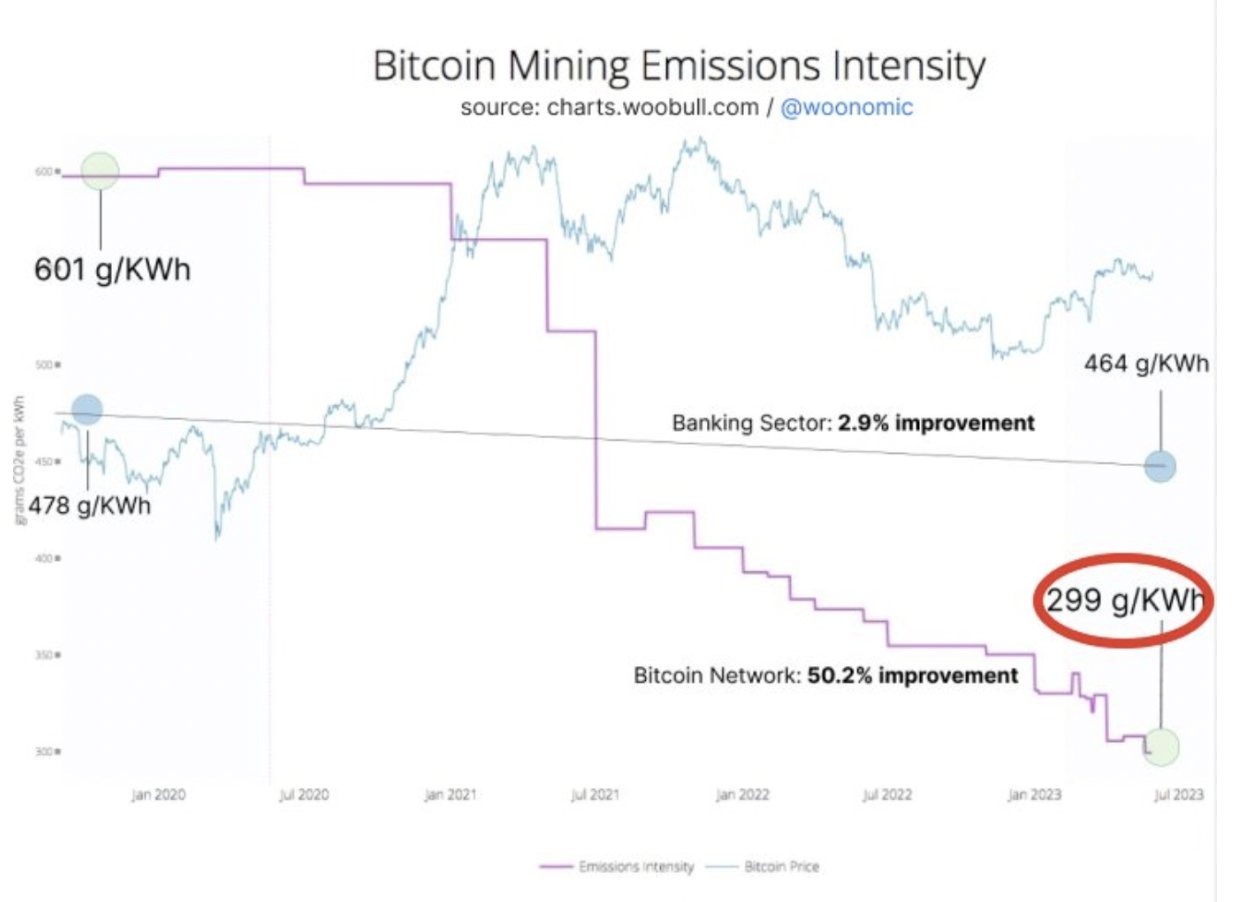
The emission intensity of Bitcoin mining is decreasing. sauce: Daniel Batten
Proof of stake is not necessarily better
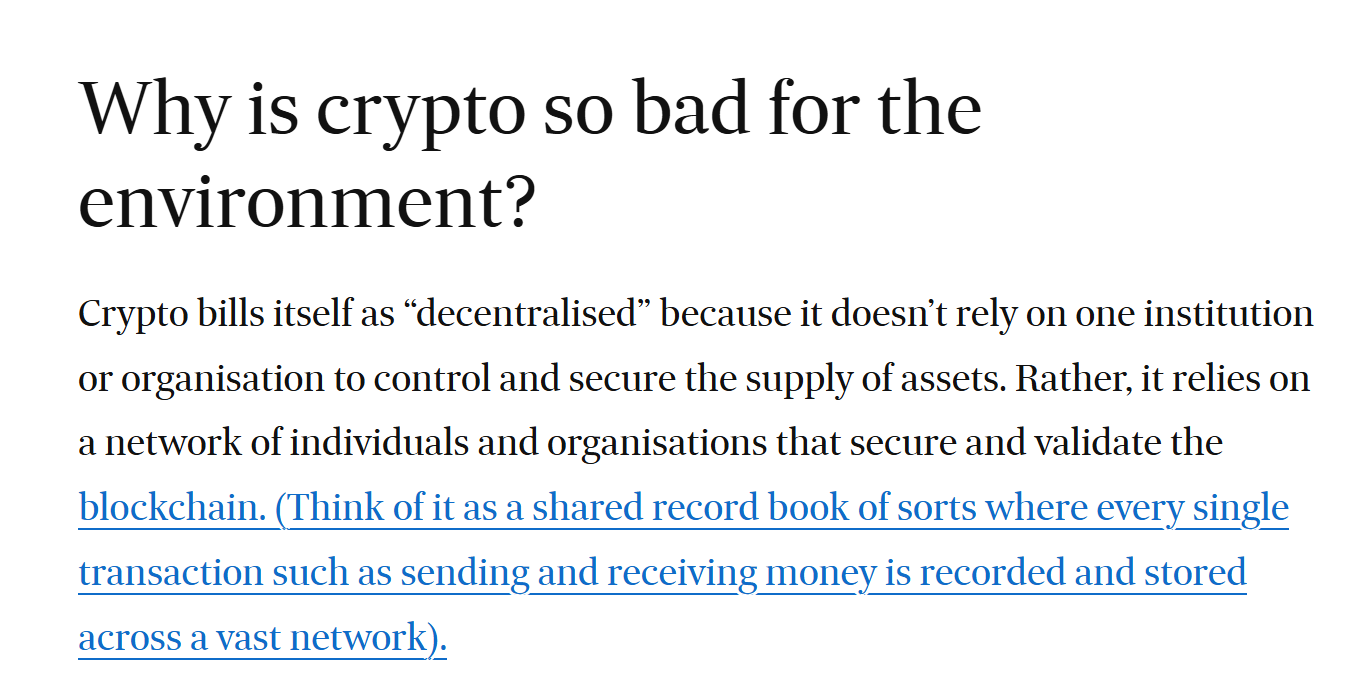
Batten also disputed the idea that proof-of-stake Ethereum (ETH) is more environmentally friendly than proof-of-work Bitcoin (BTC). Claiming that this makes PoS more environmentally friendly is “a mistake that confuses energy use with harm,” he said.
In 2022, an article in the Australian Financial Review on Ethereum’s transition to proof-of-stake stated that blockchain used to use as much electricity as Chile.
Screenshot of a 2022 article about Ethereum merging. sauce: air force
But Batten argues that PoW has many benefits, including mitigating methane, stabilizing the energy grid, increasing renewable energy capacity and monetizing wasted renewable energy.
Batten argued that while the argument that landfills and flared gas could be used for things other than Bitcoin mining is “technically correct,” it is not economically viable because it is only the economics of Bitcoin that make stranded methane viable.
Bitcoin mining facilitates the use of renewable energy
The claim that Bitcoin mining deprives other users of renewable energy is also false, he said, and evidence shows the opposite.
“Many people now have access to renewable energy as a direct result of Bitcoin mining,” Batten reported, citing a project called Gridless in Africa that has provided renewable energy to an estimated 28,000 people.
Finally, according to ESG experts, the argument that “Bitcoin mining is wasting energy” is a myth, as it prevents the waste of renewable energy, and studies have shown that over 90% of solar and wind utilization is achieved.
“Furthermore, ‘wasting energy’ is not an objective assessment, but a value judgment. It can only be argued that energy is being wasted if no benefit is produced for humanity in the process.”
magazine: Kane Warwick loses $50,000 ETH bet on Bitmine’s ‘1000x’ share plan: Hodler’s Digest


