


Ethereum (ETH) has been hovering around the $3,000 level for the past two weeks. Recently, there has been buying from companies such as Bitmine and Trend Research, but demand appears to be insufficient.
The following data sheds light on the rest of the picture, as selling pressure is strong as well. As a result, ETH is unlikely to recover quickly in the short term.
1. ETH exchange reserves rise again during Christmas week
CryptoQuant data shows that ETH reserves across all exchanges have been steadily decreasing for several months.
However, the trend reversed in December. This week, ETH foreign exchange reserves increased from 16.2 million to 16.6 million. This increase corresponds to approximately 400,000 ETH transferred to the exchange.
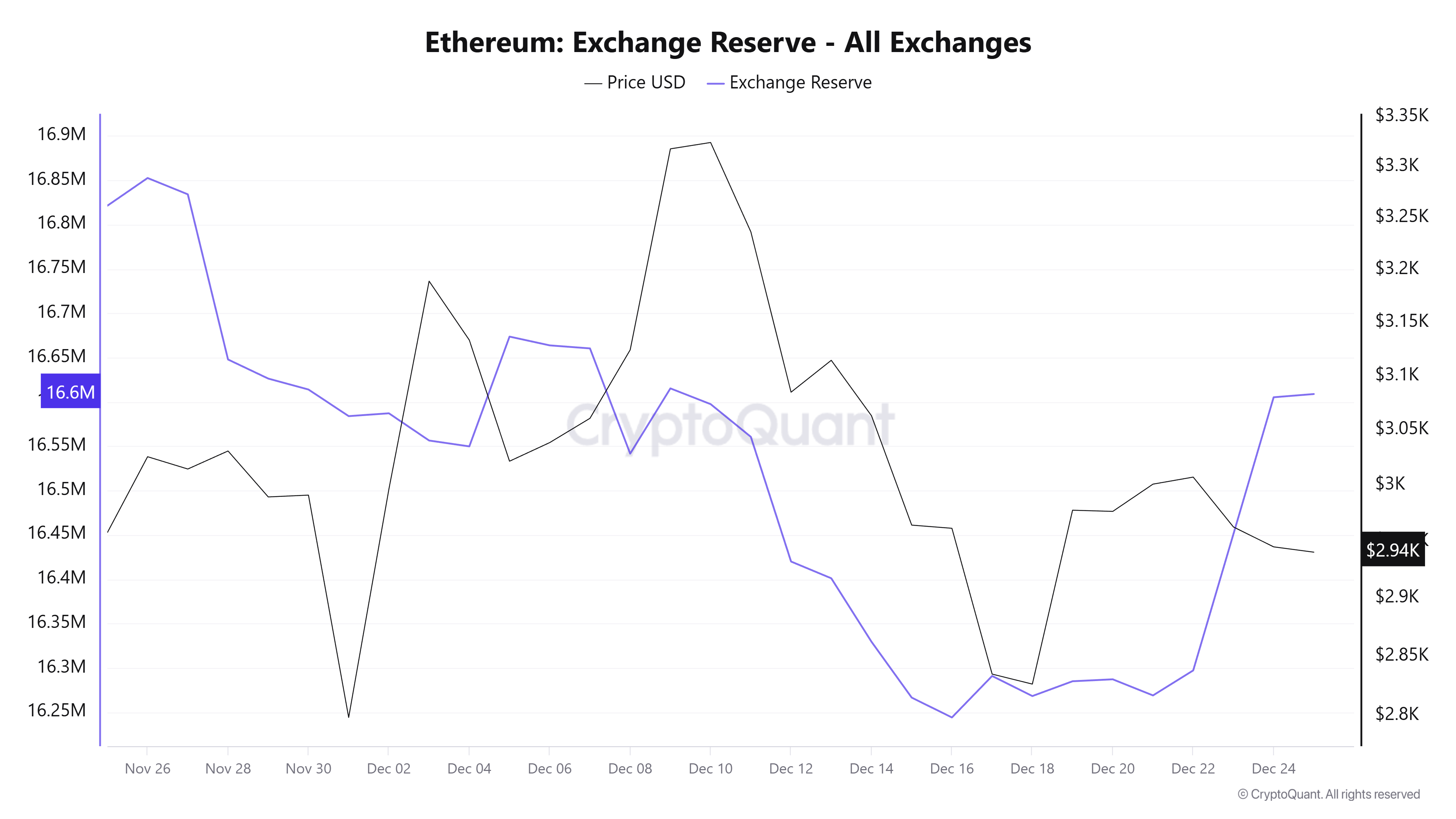
Ethereum Exchange Reserve. Source: CryptoQuant.
On-chain data revealed that one “OG whale” alone deposited 100,000 ETH into Binance.
According to a recent BeInCrypto report, BitMine Immersion Technologies purchased 67,886 ETH this week. Trend Research also purchased 46,379 ETH. Still, these numbers remain smaller than the amount of ETH transferred to exchanges.
Selling pressure may increase if ETH is transferred to exchanges for liquidation and exceeds the absorption of buys. If this trend continues until the end of the year, ETH price may face further downward pressure.
2. Ethereum’s estimated leverage ratio remains high
Another important metric is Ethereum’s estimated leverage ratio, which remains at an alarming level, according to CryptoQuant.
This ratio is equal to trade open interest divided by coin reserves. This reflects the average leverage used by traders. The rise in value suggests that more investors are taking advantage of higher leverage in the derivatives market.
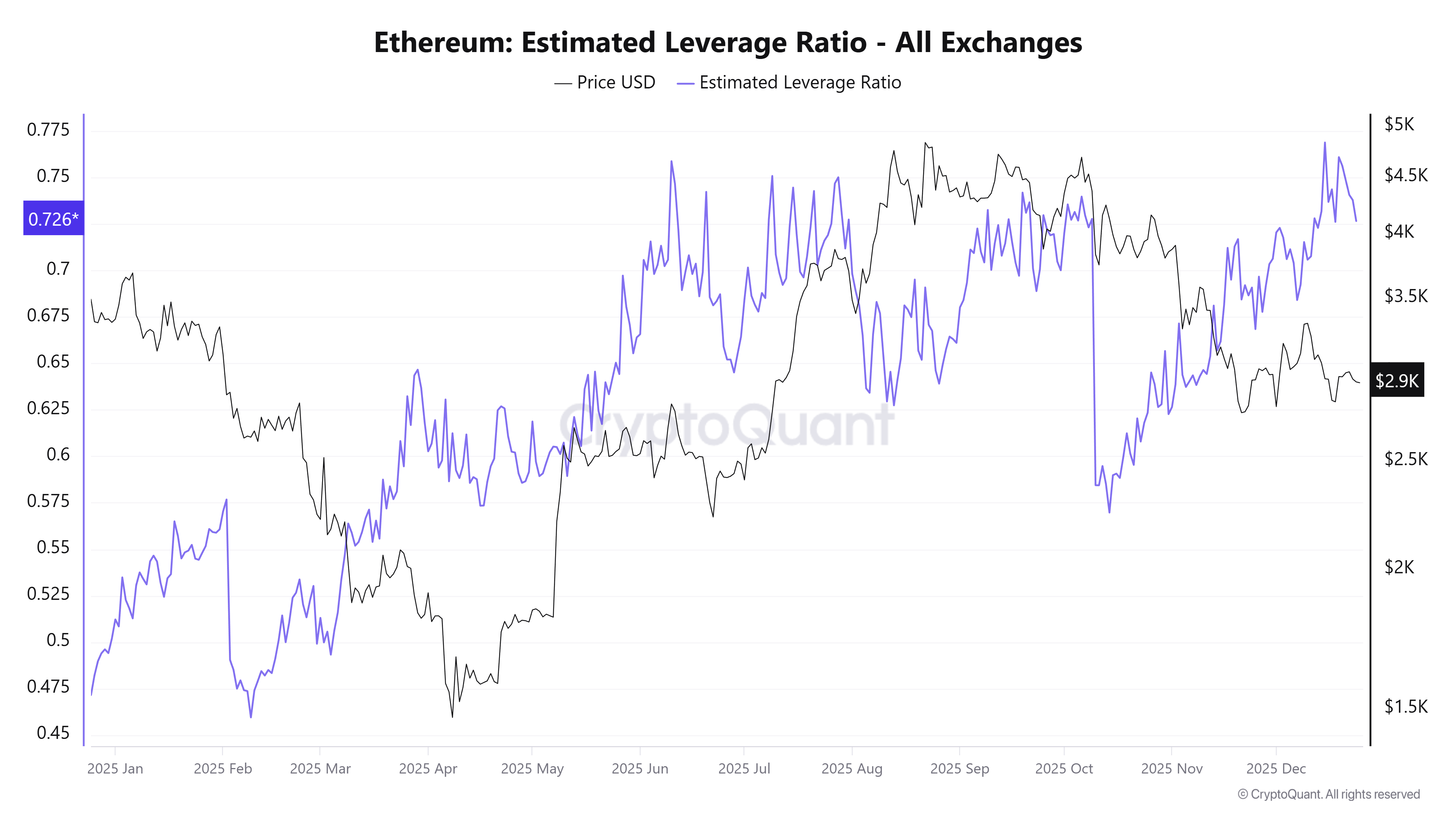
Ethereum’s estimated leverage ratio. Source: CryptoQuant.
On October 10, when the largest liquidation loss in market history occurred, the ratio was 0.72. Now, that ratio has returned to similar levels. Some measurements reach 0.76.
Ethereum remains vulnerable to small price fluctuations as leverage remains high. Such a move could trigger a chain of liquidations.
3. Ethereum Coinbase Premium turns even more negative in December
BeInCrypto previously reported that Ethereum’s Coinbase premium turned negative in December.
During Christmas week, the index moved further into negative territory. It is currently -0.08, the lowest level in the past month.
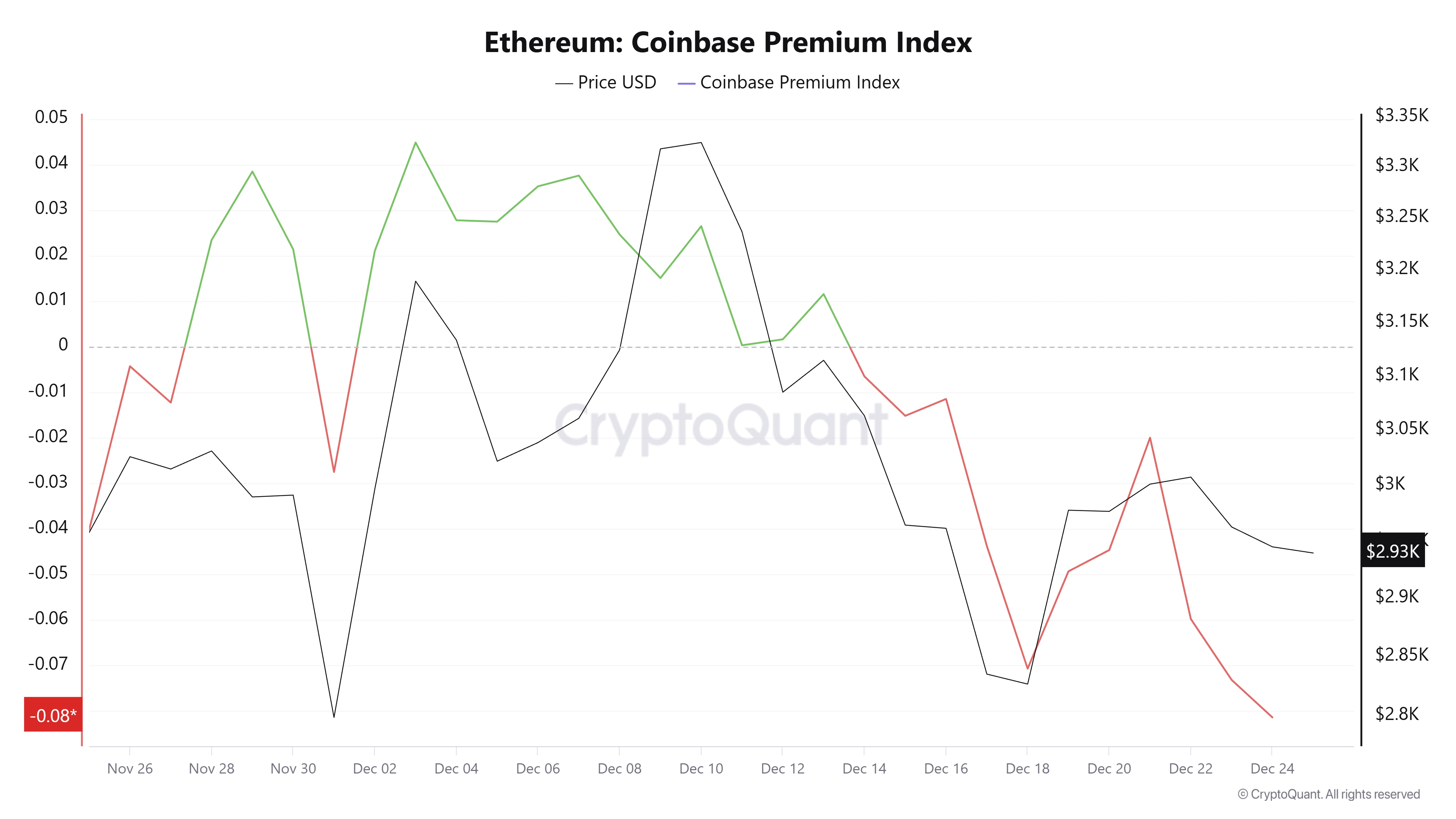
Ethereum Coinbase Premium Index. Source: CryptoQuant.
This indicator measures the percentage difference in price between ETH on Coinbase Pro (USD pair) and Binance (USDT pair). A negative value indicates a lower price on Coinbase.
This trend suggests that U.S. investors continue to sell at a discount. ETH may struggle to recover in the short term until Coinbase Premium turns positive again.
4. ETH ETF outflows for 2 consecutive months
As December draws to a close, ETH ETF flows are likely to end with two straight months of net outflows.
Last month, net flows across all ETH ETFs reached -$1.42 billion. Outflows this month have already exceeded $560 million.
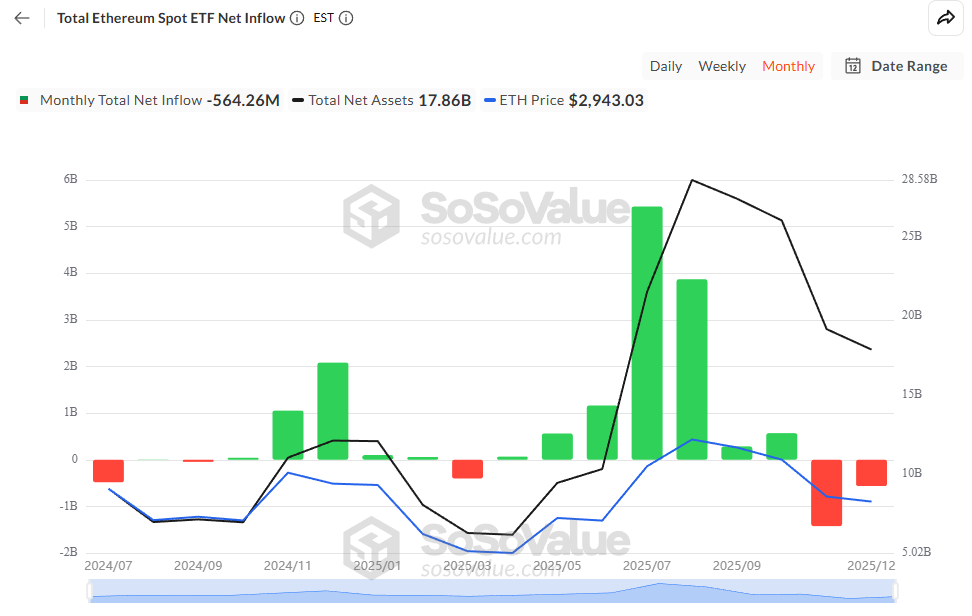
Total Ethereum Spot ETF net inflows. Source: SoSoValue.
Without new inflows, ETH will lack upward momentum. If capital outflows continue, especially during the year-end holiday period when trading volumes are low, prices could test downward support again.
“Since early November, the 30D-SMA for net flows to both Bitcoin and Ethereum ETFs turned negative and has remained negative since then. This persistence signals a phase of subdued participation and partial disengagement from institutional investors, reinforcing the broader liquidity contraction across crypto markets,” Glassnode reported.
In summary, four signals – rising exchange reserves, rising leverage, large negative premiums, and sustained ETF outflows – suggest that ETH may remain in the consolidation phase or face further decline.
Maintaining appropriate stop-loss levels on derivative positions and using prudent capital allocation for spot purchases can help traders reduce risk amid unexpected volatility.
The post 4 warning signs that Ethereum (ETH) price may not recover soon appeared first on BeInCrypto in late December.


