


Bitcoin may be showing early signs of new bullish momentum as several macro and on-chain indicators are starting to align.
Recent data suggests that tight supply, strong demand signals and changes in investor behavior may be supporting the recent price rebound.
Most Bitcoin analysts are very bullish. pic.twitter.com/vPw6axyEV3
— Ki Young-ju (@ki_young_ju) March 16, 2026
Exchange supply is shrinking
One important signal comes from exchange flows. Data shows that Bitcoin inflows to exchanges, especially Binance, have fallen sharply in recent weeks.
Historically, when currency inflows decrease, selling pressure decreases because fewer coins are available in the spot market.
When coins remain in a wallet rather than being transferred to an exchange, it often indicates that the holder is choosing to hold on to their Bitcoin rather than sell it.
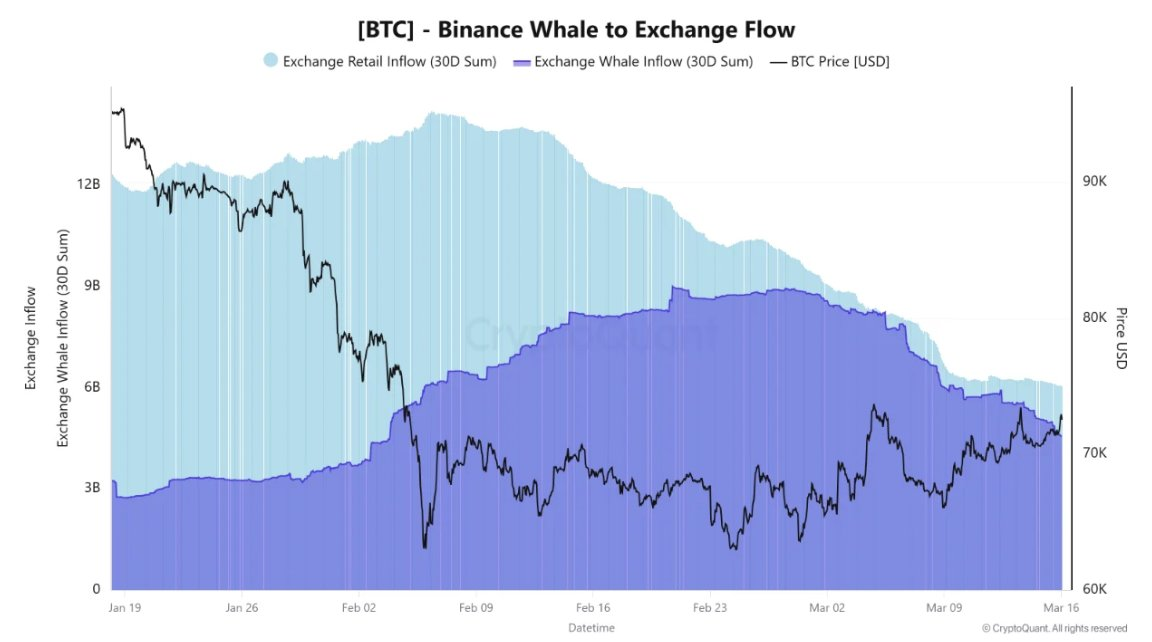
Flow from Bitcoin whale to exchange. Source: CryptoQuant
At the same time, stablecoin issuance and ETF purchases reportedly increased. This combination suggests that new liquidity may be flowing into the market while available supply tightens.
Whales dominate market activity
Another important indicator is the whale ratio of Bitcoin exchanges, which has reached its highest level in six years. This indicator tracks the amount of exchange activity by large holders.
An increase in the whale ratio means that large companies are responsible for a larger share of transactions.
Past cycles have seen similar spikes around key inflection points when institutional investors and “smart money” began taking positions ahead of market movements.
BTC whale ratio on exchanges reaches highest level in 6 years
“When the exchange whale ratio rises, it signals a short-term bottom, and when the ratio peaks, it is the point at which an uptrend begins.” – via @CW8900 pic.twitter.com/zyt71q5DsW
— CryptoQuant.com (@cryptoquant_com) March 16, 2026
However, this indicator can be interpreted in different ways. This could indicate accumulation by large investors, but it could also indicate preparation for distributions if prices rise further.
Bitcoin goes up, gold goes down
Market performance over the past week adds another interesting clue. Over the same period, gold prices fell slightly, while Bitcoin rose about 7%.
This divergence suggests that some capital may be rotating into Bitcoin from traditional safe-haven assets.
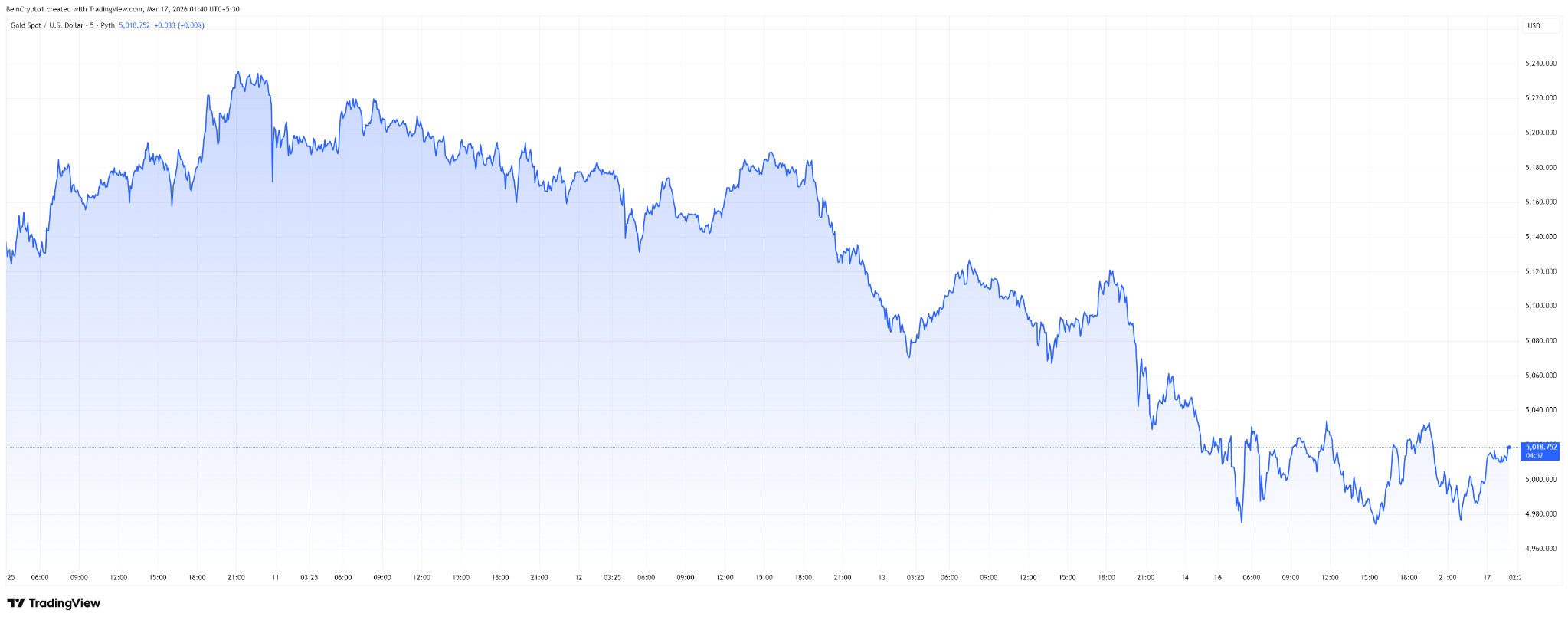
Gold prices continue to fall. Source: TradingView
Macro stress remains
Meanwhile, global energy markets remain under pressure. Bunker prices in major refueling hubs such as Singapore and Fujairah have soared to record levels, underscoring widespread economic stress.
Despite this background, Bitcoin continued to rise and showed resilience even during a period of geopolitical uncertainty.
Fuel prices are rising all over the world.
Fuel oil prices in Singapore, the world’s most important refueling port, have reached a record level of $140 per barrel.
This marks a +146% jump since the beginning of the year.
Prices now exceed the 2008 financial crisis and the 2022 financial crisis… pic.twitter.com/Nml9IrHGIl
— Kobeissi Letter (@KobeissiLetter) March 16, 2026
Taken together, the data points suggest that Bitcoin’s market structure may be improving. Supply appears to be tight, demand signals are strengthening, and investors are increasingly focused on Bitcoin’s role in the evolving macro environment.
This article, “4 Key Signals Suggesting Bitcoin Prices Are Turning Bullish Again” was first published on BeInCrypto.


